
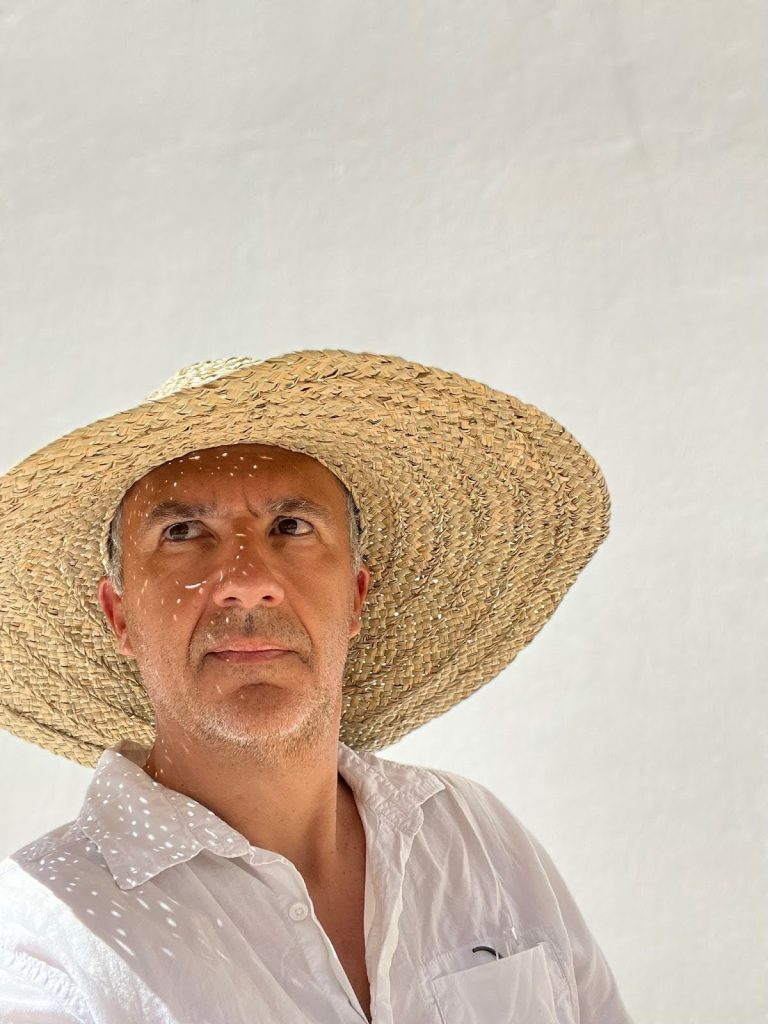

Emmanuel Neiman is one of France’s most respected and seasoned chess trainers, a coach whose decades of experience have shaped players of all levels: from club competitors to titled players. Having worked with a diverse range of students, Neiman is especially fond of his work with children with autism spectrum disorders. And what he cherishes the most from his coaching journey are the lasting friendships he’s forged.
One story captures well his practical, student-first approach. Ahead of a decisive game for a club title, one of Neiman’s pupils was paired with a lower-rated player known for tricky opening play. Fearing an opening trap, Neiman convinced his student on the same morning of the game to step outside her usual repertoire and adopt the Petroff and the Nimzo-Indian against 1.e4 or 1.d4 respectively. While her opponent ended up surprising her with a King’s Gambit, she remained calm, applied what she had learned, and went on to win smoothly.
For Neiman, the lesson was clear: flexibility, confidence and clear ideas often matter more than we think.
Based in Paris, Neiman is also an acclaimed author thanks to books like Invisible Chess Moves, co-written with Yochanan Afek, and Tune Your Chess Tactics Antenna. Both works, originally published by New In Chess, are considered modern classics for tactical training and are available on Chessable.
Nieman shares his philosophy and tips in this interview:
What is your chess coaching philosophy?
Enable the student to do without trainers, and have fun. I believe that a trainer helps at first, but a really strong player has to work on their own and make their own decisions, even regarding training, after having been well-taught.
The main job of the trainer is to show the student how to work efficiently by themselves.
Of course the emotional support can be important especially in tense situations like in big championships but I don’t think it is specific to chess – a sport psychologist could do it.
Suppose a player has only 3 hours a week for chess training. How should they spend their time?
Tactics. Provided they play, three hours of tactics (half an hour a day) is the best way to get better results in the first place.
What is the biggest factor for improvement for players under 1200 (Chess.com)? Under 2000?
Under 1200: Play as much as possible and train your tactics.
Under 2000: It is a combination between playing, training and learning (openings/typical middle games/endings).
The more experienced player should do more training, the newest should play more.

What is your preferred way to improve at openings? What’s the approach to chess openings that you try to teach your students?
- Choose an opening, and learn some lines.
- Analyze the games from a strong player, someone who is a specialist of the opening.
- Play as many blitz games as possible using the opening to practice the positions; if it is a group, prepare selected typical positions and play them out, then discuss, work on specific items and play again.
I guide my students in the choice of openings according to their own style and show them the original variations. Then, I try to teach every student to study on their own the theory and novelties. Looking daily at Chess.com news and game of the day will give them the most important novelties from elite players.
What is your preferred way to improve at the endgame?
- Playing the typical positions, like rook and pawn against rook (for Novice) or typical rook endgames of 4 vs 3, then reviewing the games and playing again.
- Solving selected studies and positions.
- From time to time reviewing the basic theory, and adding some new theoretical positions. Always check the most important by playing them in blitz.
Is there anything else you would like to share with ambitious chess improvers?
Ambitious players should play ambitiously: no opening traps, real repertoires that allow them to play with all kinds of pawn structures. You must be ready for any position, whether it is attacking or endgames – real chess!
FM Emmanuel Neiman on Chessable
Both Neiman’s courses on tactics were originally printed by New In Chess.
- Invisible Chess Moves delves into why certain winning ideas remain unseen even when they are right in front of us. Neiman and co-author Yochanan Afek categorize and explain the psychological, positional and geometric reasons behind these blindspots. This award-winning work has been praised by chess legends Boris Gelfand and Yasser Seirawan.
- Tune your Chess Tactics Antenna is endorsed by IM John Bartholomew, co-founder of Chessable, who especially requested for it to be published on the platform in its early days. The course focuses on teaching players not just how to calculate tactics but when and where to look for them. Neiman identifies key signals that a winning opportunity is in the air and trains readers to spot these cues in actual games.
More recently, Nieman published Level Up Your Pawn Play, a practical course where he shows how pawn structure, timing, and subtle pawn moves can quietly shape the entire battle. Drawing from games by elite players including Magnus Carlsen himself, Neiman shares rules and techniques to better understand pawn play.
Check out his author page!