

Working on your golf game alone can be daunting. With so many factors at play, it’s hard to know where to focus — especially since what works for one player may not work for another.
Launch monitors can help cut through the guesswork by offering objective, personalized feedback. They track key swing metrics and provide actionable insights that translate directly to better performance.
Still, with all this data at your fingertips, it’s easy to feel buried in the numbers. Which metrics will actually move the needle, and which are just noise? According to GOLF Top 100 Teacher Joe Plecker, two data points are essential if you want to build a consistent, reliable swing: face angle and club path.
Here’s a closer look at each — and how they directly influence your swing.
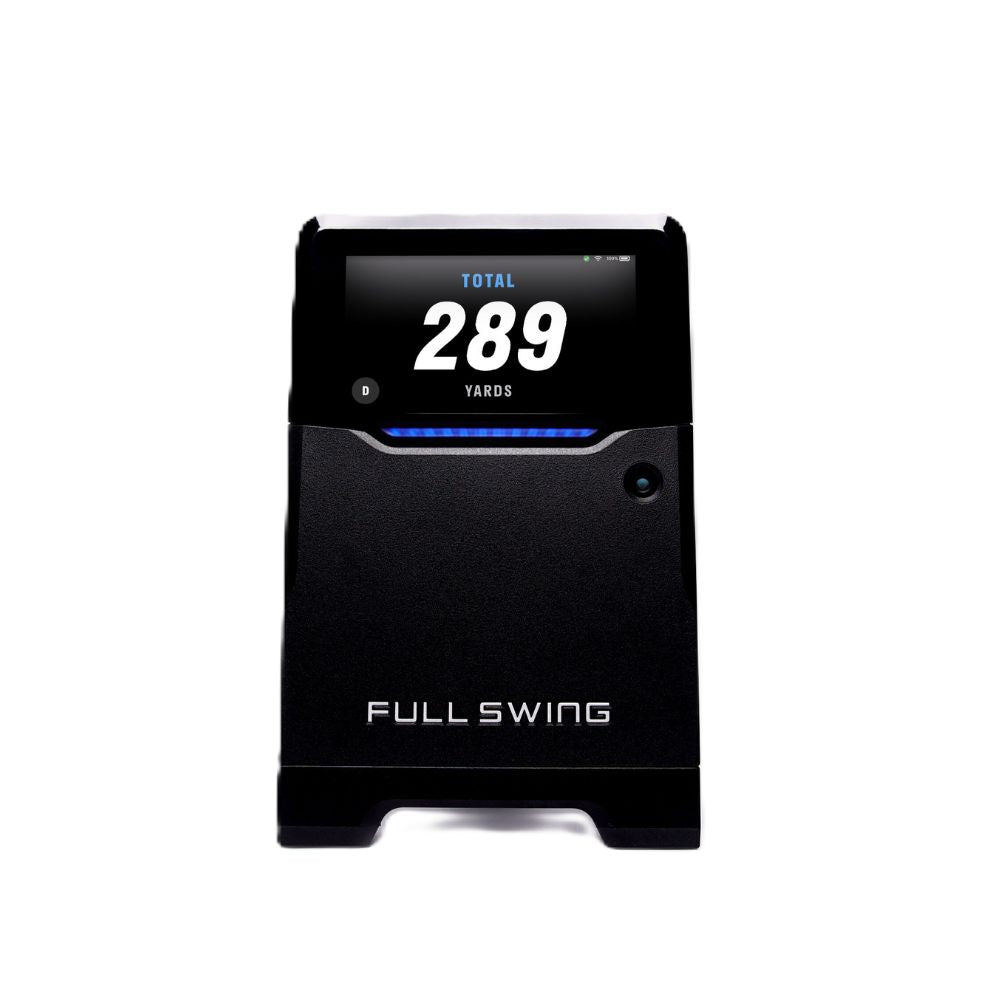
Full Swing KIT Launch Monitor
The Full Swing KIT Launch Monitor is engineered with the most advanced radar technology and a high-resolution camera to give you 16 points of data and video to see your swing in perfect clarity. Tested & trusted by Tiger Woods, made for everyone.
5D Machine-Learning Enhanced Radar
The most innovative radar technology, patented to get the most accurate readings in a more compact design at a lower cost.
Heads-Up Display
The only launch monitor to let you see what mattes on a customizable full-color display.
Portable
Build to be taken to and from the course with quick & easy setup to get your practice started faster.
“I KNOW THAT FULL SWING IS MEASURING MY GOLF BALL, NOT GUESSING AT IT.”- Tiger Woods
View Product
Face angle: Understand where your clubface
Face angle measures the horizontal direction your club face points at impact. In simple terms, it tells you whether your face is square, open or closed. A perfectly square face reads as 0 degrees — but in reality, very few golfers consistently hit exactly 0. So understanding the different numbers is key.
For right-handed players, a positive number indicates an open face, which pushes the ball to the right. A negative number signals a closed face, sending the ball left.
Tracking face angle lets you see the true starting direction of your shots. More importantly, it provides insight into how well you control ball flight, helping reduce common mishits like hooks and slices. By keeping an eye on this single metric, you gain a critical reference point for dialing in a straighter, more predictable swing.
Club path: Track swing direction
Club path measures the direction your club travels throughout your swing, offering a window into the mechanics of your swing. For right-handed golfers, a positive reading indicates an in-to-out path, which typically produces a draw. While a negative reading reflects an out-to-in path, often resulting in a fade.
Analyzing club path reveals how your swing plane and body rotation influence ball flight. It shows whether your club is approaching the ball on the correct angle and can even uncover subtle flaws that lead to inconsistencies or frustrating shots.
When examined alongside face angle, club path completes the picture of your game — explaining not just where the ball starts, but why it behaves the way it does. Together, these metrics provide the insight needed to develop a precise, repeatable swing.