
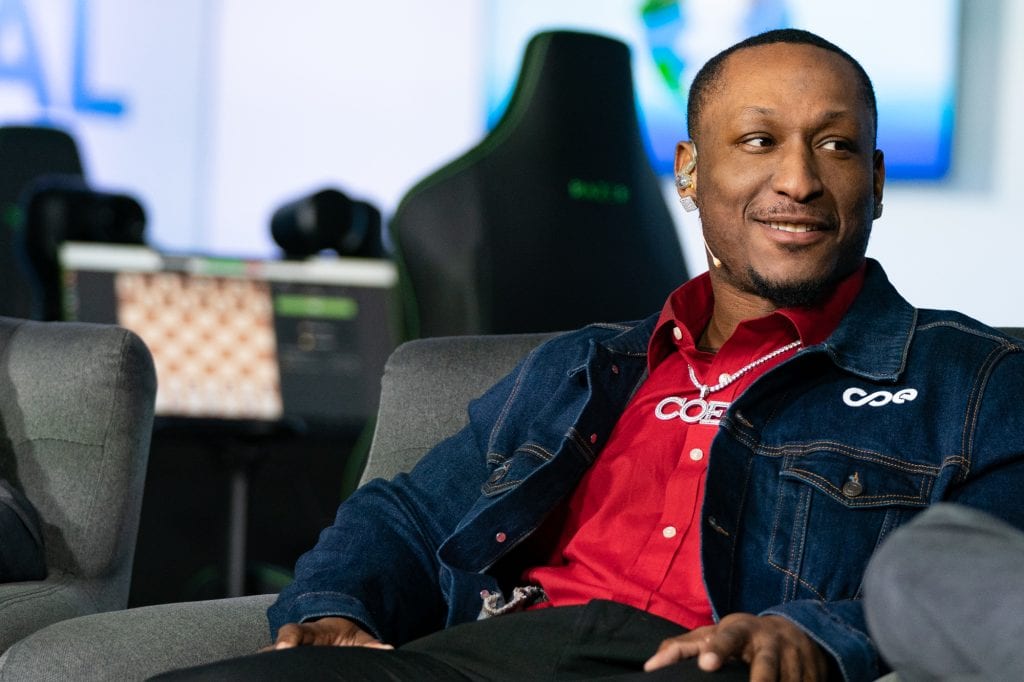

James Canty III shines brightly on many stages: as an aggressive chess player, a star commentator, and notably, World Chessboxing Champion. But the American master also actively strives to pass his wisdom on and build future champions. Through his Chessable courses and his role as a chess trainer, Canty is helping countless players achieve new heights.
Long before the accolades and growing spotlight, Canty was already teaching the game with uncommon maturity. At just 14 years old, armed with a 2100 rating and an instinct for communication, he began coaching anyone willing to learn. Over the years, his coaching philosophy evolved and he became obsessed with a simple but powerful question: why do students forget so much of what they learn?
Rather than accept it, Canty engineered a solution. Every lesson became an active process with real-time notes, structured homework and a system designed to extend learning beyond the session itself. That impact is something Canty takes great pride in. From ambitious amateurs making huge leaps in months, to disciplined players crossing the 2000 mark, to young talents rising quickly under his guidance… each success reflects his method. His reach even extends to elite athletes like NFL’s Justin Reid, whose blitz success came with Canty’s coaching behind the scenes.
After talking with Canty it’s clear that he doesn’t chase quick wins. He looks to instill the same mindset that has shaped his own journey: steady effort, daily focus and respect for the process.
In this interview, Canty talks extensively about his thoughts on chess training and shares practical tips for chess players.
What is your chess coaching philosophy?
My coaching philosophy is built around clarity, confidence, and purposeful aggression. Even if you are a positional player, we will first strengthen that, through positional exercises and training, then circle back around to aggressive chess. I have a training system and a thinking system that I teach all my students. It is rooted in rigorous chess training and how to think in 3 steps. Step 1 falls off fast and then you rely on steps 2 and 3 for the rest of the game, with aggressive chess thinking at the forefront. I teach ultra-aggressive chess, but it’s grounded in sound principles—development, initiative, piece activity, and pressure. The goal is to help players understand when and why to attack, not just to attack for the sake of it.
My approach comes directly from my own playing and competitive experiences. I focus on repeatable attacking ideas, familiar structures, and tactical patterns that show up again and again in real games. Instead of memorizing long engine lines, students learn how to recognize moments to seize the initiative, create threats, and force their opponent into uncomfortable positions.

Suppose a player has only 3 hours a week for chess training. How should they spend their time?
Great question! I would recommend this: 3 days a week, 1 hour sessions.
The best work you can do is CALCULATION training, getting the reps in as much as possible. You calculate in your own games, so this is a skill you need to spend the most time on. The breakdown is like this – 1 hour – Tactics training, puzzle rush for instance, the 5 minute one, looking to get a score of 30 or more each time, 1 hour of this max.
Next day – 1 hour looking at MODEL GAMES, like something from Chessable courses (model game section that many don’t even get to!) or model games from a tournament going on, like Tata Steel Chess. Sit and try to guess the moves in the game, calculating and working through the moves; this is a very good way to train, and get real time games.
In the last hour of the week, I recommend playing games, rapid games for around 10 minutes, so you have some time to think, and make sure to lightly analyze your games right after you finish.
What is the biggest factor for improvement for players under 1200 (Chess.com)? Under 2000?
I think the biggest factor for improvement for players under 1200 is tactical training. Go check your last 20-30 games, they were most likely concluded with a tactical blow from either side, so the better you get with tactics, the higher your rating will go in this range.
For under 2000, a big part is tactical training still, with ENDGAMES being right next to it. You must know some key endgames and know which ones are easy wins for you. Hard and continuous tactical training with endgames will be the key!

What is your preferred way to improve at openings? What’s the approach to chess openings that you try to teach your students?
Not gonna lie about this one, Chessable is it! USE IT. I cannot stress that enough. The approach to chess openings that I teach my students is to memorize the PLANS AND IDEAS first. Memorizing the moves is cool, but you will forget a lot of it, and if you don’t remember the ideas, you can get cooked right after you play the moves straight out the book! But if you remembered the ideas and plans, then you could potentially find or even remember the moves!
What is your preferred way to improve at the endgame?
Not gonna lie, I had the best success with just devouring endgame books. Though I am a HYPER aggressive player, I studied a lot of endgames, and it helps in all areas.
Here are the books I’ve read, and with Chessable, you can read them in a fraction of the time!
- 100 Endgames You Must Know
- Jeremy Silman’s Complete Endgame Course
- Van Perlo’s Endgame Tactics
- Theoretical Rook Endgames by GM Sam Shankland
- And the final boss: Dvoretsky’s Endgame Manual

Is there anything else you would like to share with ambitious chess improvers?
KEEP GOING. Do not stop practicing. There is a thing called the compound effect, which means, all the training you are doing right now will compound, then one day, you go on those big win streaks and rating boosts. IT WILL PAY OFF, and NEVER let anyone deter you from your goal, or tell you that you can’t do something, this is your journey, so keep going, and keep your head high, and keep using Chessable!
Chessable courses by FM James Canty III
Canty’s hyper aggressive style of play is on display in his opening courses:
Both courses are on sale until April 16, 2026.
For a full list of James Canty’s courses, visit his Chessable author profile.