


Erdogmus, Zhu and Van Foreest score
Round four of the TePe Sigeman & Co Chess Tournament brought three decisive games and a significant shift in the standings. Yagiz Kaan Erdogmus, the 14-year-old Turkish prodigy, moved into sole first place after beating Nils Grandelius, while Jorden van Foreest scored his first-ever win over Magnus Carlsen. Zhu Jiner, meanwhile, collected her first victory of the event, defeating Andy Woodward. The only draw of the day came in the game between Nodirbek Abdusattorov and Arjun Erigaisi.
Round 4 results
Erdogmus is now the outright leader on a plus-two score. The rising star has beaten Zhu and Grandelius, while drawing his other two games, giving him a half-point lead with three rounds to play in the seven-round event. His latest win also deepened Grandelius’ difficult start in Malmö: the Swedish number one has now lost all four of his games in the tournament.
The London System is one of the most popular openings at every level of chess but not all Londons are the same. In this course, Grandmaster Elisabeth Pähtz presents the London System, a structured and ambitious approach based on the immediate Bf4, leading to rich and dynamic positions.
Free sample video: Introduction
Free sample video: 5…cxd4 6.exd4 Qb6 sidelines
Three players stand half a point behind the leader. Abdusattorov and Erigaisi remain in close contention after splitting the point in the only drawn game of the round, although the battle could have developed in Abdusattorov’s favour, who had also left an advantage slip in his Saturday encounter against Woodward.
In this video course, Grandmaster Ivan Sokolov explores one of the most intriguing and under-examined areas of modern chess: reversed opening systems, focusing on the Reversed Grünfeld and the Reversed Dutch. At first glance, these two systems seem unrelated. However, they share a common strategic challenge: the value of tempi, structure, and psychology when familiar openings are played with colours reversed. Drawing on his long professional experience, Sokolov explains why these positions are far more subtle than they appear and why traditional engine evaluations often fail to capture their true complexity.
Free sample video: Introduction
Free sample video: Larsen’s b4 Plan vs Reversed Stonewall Setups: Larsen – Spassky
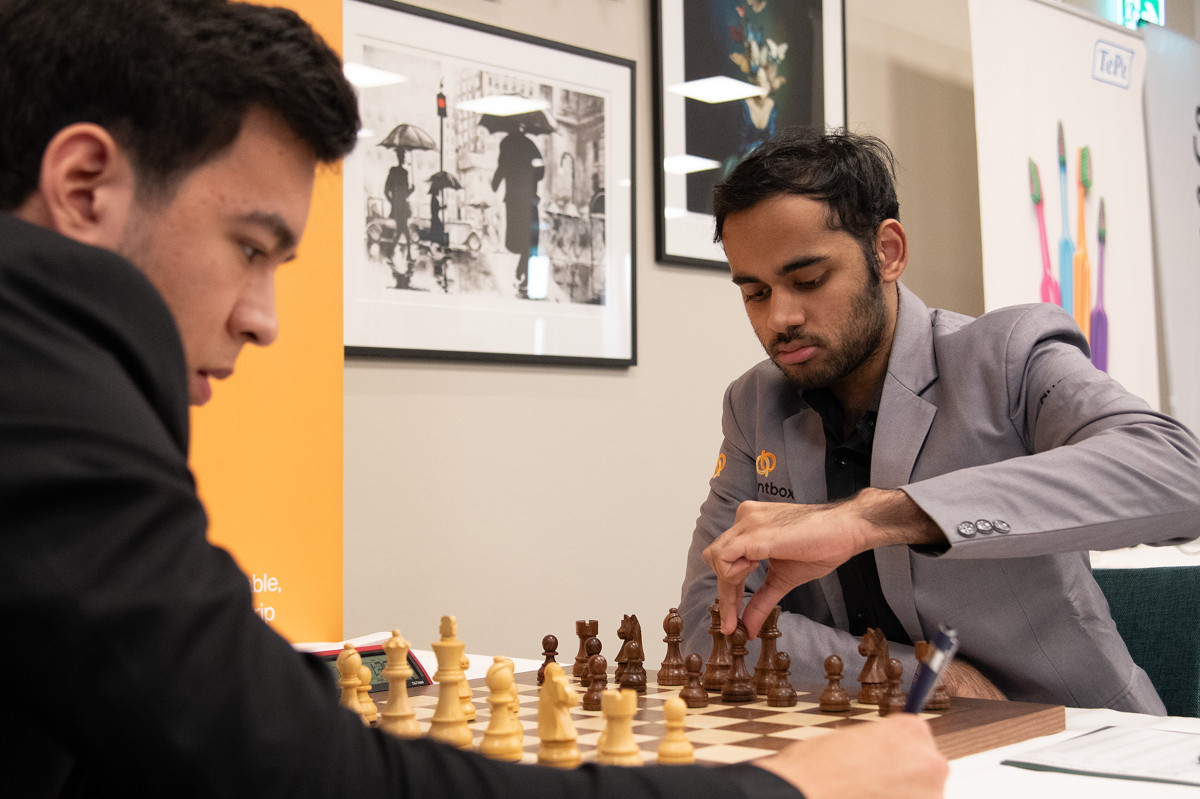
Arjun Erigaisi | Photo: Petter Doggers / Official website
Van Foreest joined Abdusattorov and Erigaisi in the chasing group after the most notable result of the day. Playing with the white pieces, the Dutch GM defeated Carlsen in an exciting, 88-move game, earning his first victory over the multiple world champion.
After gaining an extra pawn in a queenless position, Van Foreest had to work hard to beat his famed opponent, as the Norwegian was inches away from escaping in the technical endgame that arose with rook and pawn against knight and two pawns.
Picture this: you’ve outplayed your opponent move by move, you’re clearly better – and then the endgame slips into a draw, simply because you lacked the crucial theoretical knowledge. That is exactly where this course comes in. Without solid endgame skills, there’s no way forward. Rook endgames are most essential: they occur more often than any other type of endgame, and often make the difference between victory and half a point. If you master them, you’ll confidently convert your advantages into wins!
Free video sample: Introduction
Free video sample: Bodycheck
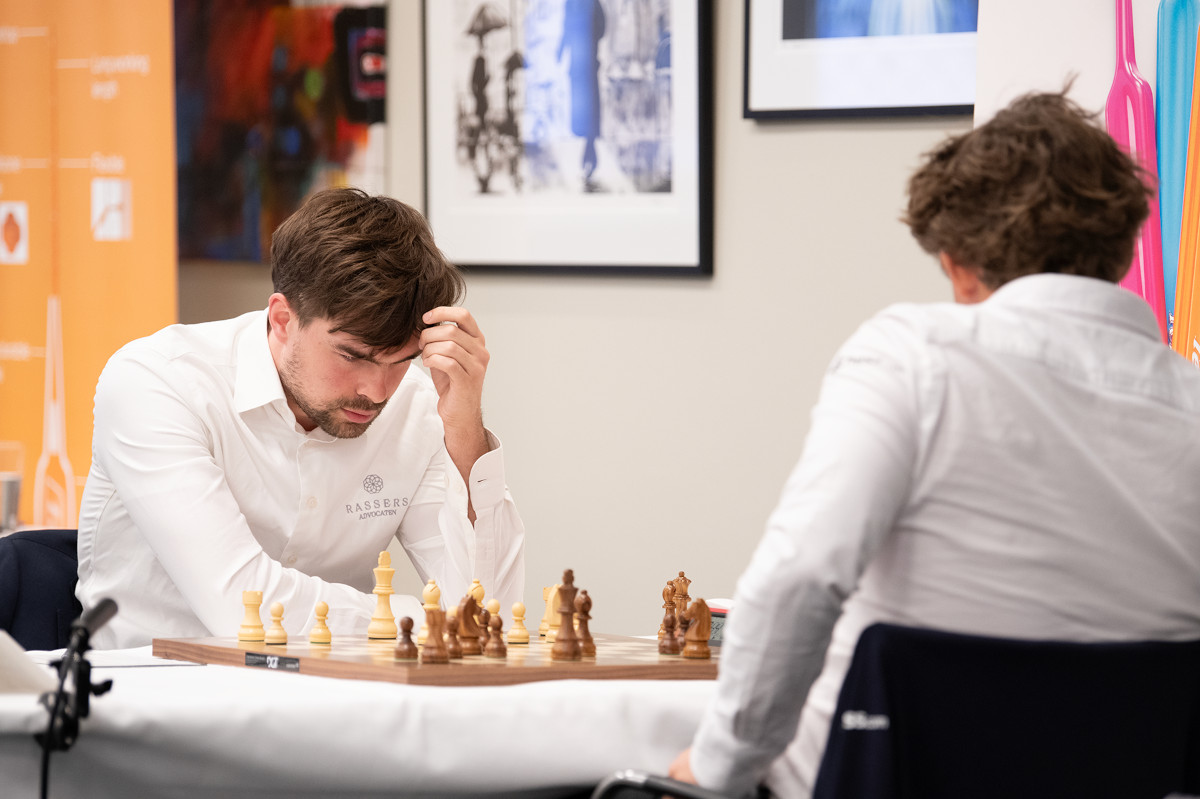
Looking for a way to make the most of an advantageous position against the strongest player of this era – Jorden van Foreest | Photo: Peter Doggers / Official website
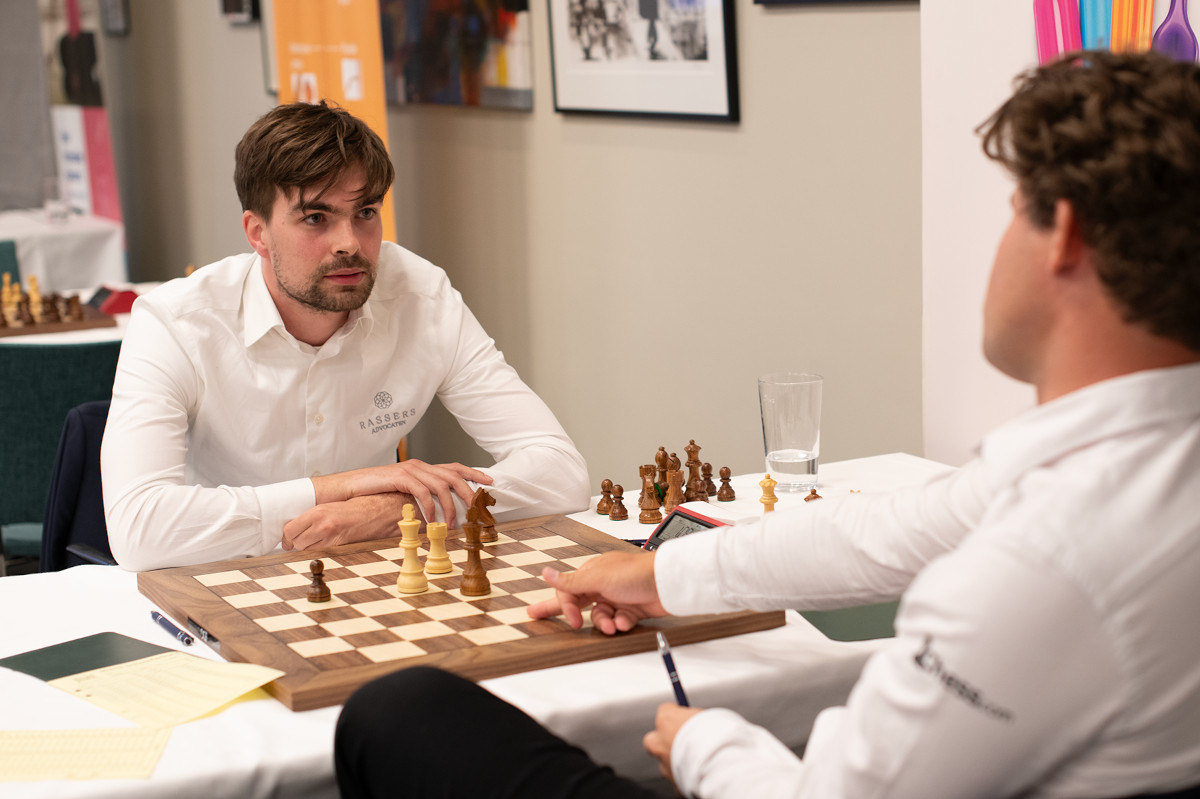
Discussing what turned out to be a nervy, lengthy struggle – Jorden van Foreest and Magnus Carlsen | Photo: Peter Doggers / Official website
Zhu’s win over Woodward was also important for the standings. After a difficult start, the Chinese grandmaster got off the mark by handing Woodward his first loss of the tournament. Woodward, who had begun the event with a win over Grandelius and then remained among the leaders, is now tied for fifth place with Carlsen. Both players have one win, two draws and one loss after four rounds.