

On Larry Christiansen’s 70th birthday
US grandmaster Larry Mark Christiansen was born on 27 June 1956 in Riverside, California. As a child, he was enthusiastic about swimming and water polo, but then he saw older children playing chess at the swimming pool in his home town and watched their games with fascination. Larry Christiansen was nine years old at the time. From that point on, he spent a great deal of time playing chess and checkers with his brother Jim.
In 1971, at the age of 15, Larry became the first junior high school student to win the US High School Championship. In the early 1970s, he played very successfully in various open tournaments and junior events in the United States. In 1973, 1974 and 1975 he won the US Junior Championships. Christiansen qualified for the final of the 1973 World U20 Championship in Teesside and finished in shared 3rd-7th place. Alexander Beliavsky won the title at the time ahead of Anthony Miles. In 1973, Christiansen was one of the participants in the International German Junior Championships, held in Bamberg. There, too, he shared 3rd-7th place. Bernd Feustel was the clear winner.
In the following years, Christiansen took part in countless opens and youth championships and collected many successes. At the 1975 World U20 Championship in Yugoslavia, played as a Swiss-system tournament, he won the silver medal behind Valery Chekhov. At the 1976 Lone Pine Open, the 20-year-old finished in shared second place behind Tigran Petrosian, together with many other well-known players, including Vasily Smyslov and Miguel Najdorf.
After his tournament victory in Malaga and on the basis of many other successes, FIDE awarded him the grandmaster title directly in 1977, without Christiansen having previously been an international master.
For a time in the late 1970s, Christiansen earned money by travelling across the United States from coast to coast and giving chess exhibitions on behalf of “Church’s Fried Chicken”. In 1980 and 1983 he became US champion. In 2002, he won the title once again.
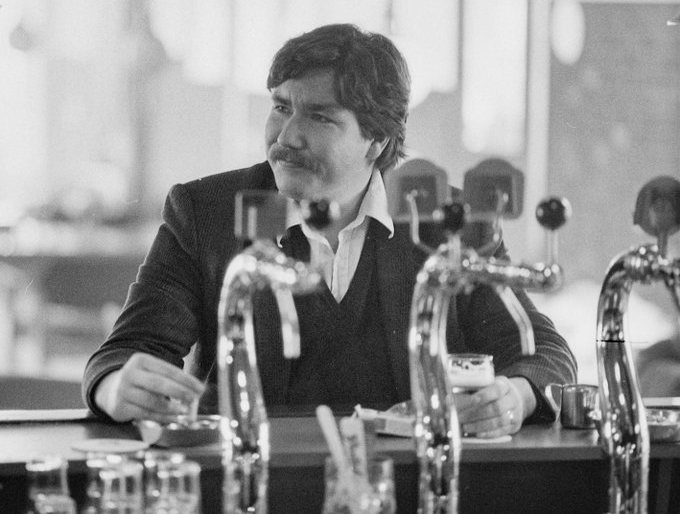
In the mid-1980s, Christiansen temporarily moved his residence to Germany. From 1987 to 1997 he played for SG Porz in the Bundesliga and twice won the German Team Championship title, in 1994 and 1996. In the 1989/1990 season, Christiansen was the best player in the league with 12 out of 13 points to his name.
From 2005 to 2011, Christiansen played for Boston Blitz in the United States Chess League.
 His greatest tournament successes include victory at Linares in 1979 and shared first place together with Anatoly Karpov at the same venue two years later. Christiansen also won in Cologne in 1988, the strong tournament in Munich in 1991, Wiesbaden 1994, Reykjavík 1998, Essen 1999 and numerous opens, including the US Open three times: in 1981 (shared), in 1983 together with Korchnoi, and again in 1986. In 2001, Christiansen also won the Canadian Open Championship, the Curaçao Open in 2008 and the Bermuda Open in 2011.
Christiansen at the Pan Pacific in 1995 | Photo: Tournament organiser
Karpov’s early blunder while playing black against Christiansen in Wijk aan Zee is famous:
Christiansen also managed to beat Karpov in a “normal” game:
Between 1980 and 2002, Christiansen represented the United States as a player at nine Chess Olympiads, winning the team silver medal in 1990 and four bronze medals. He later served three times as non-playing captain. At the 1998 Chess Olympiad, his team only narrowly missed the gold medal and won silver. In 1993, he won gold with the US team at the World Team Championship, and in 1997 he won the silver medal.
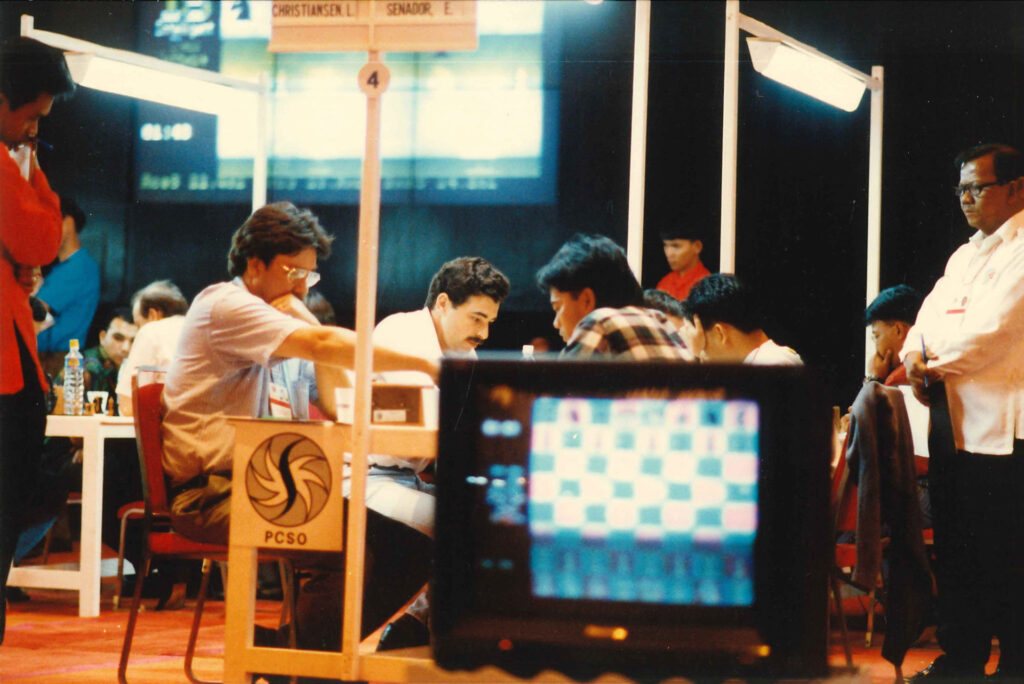
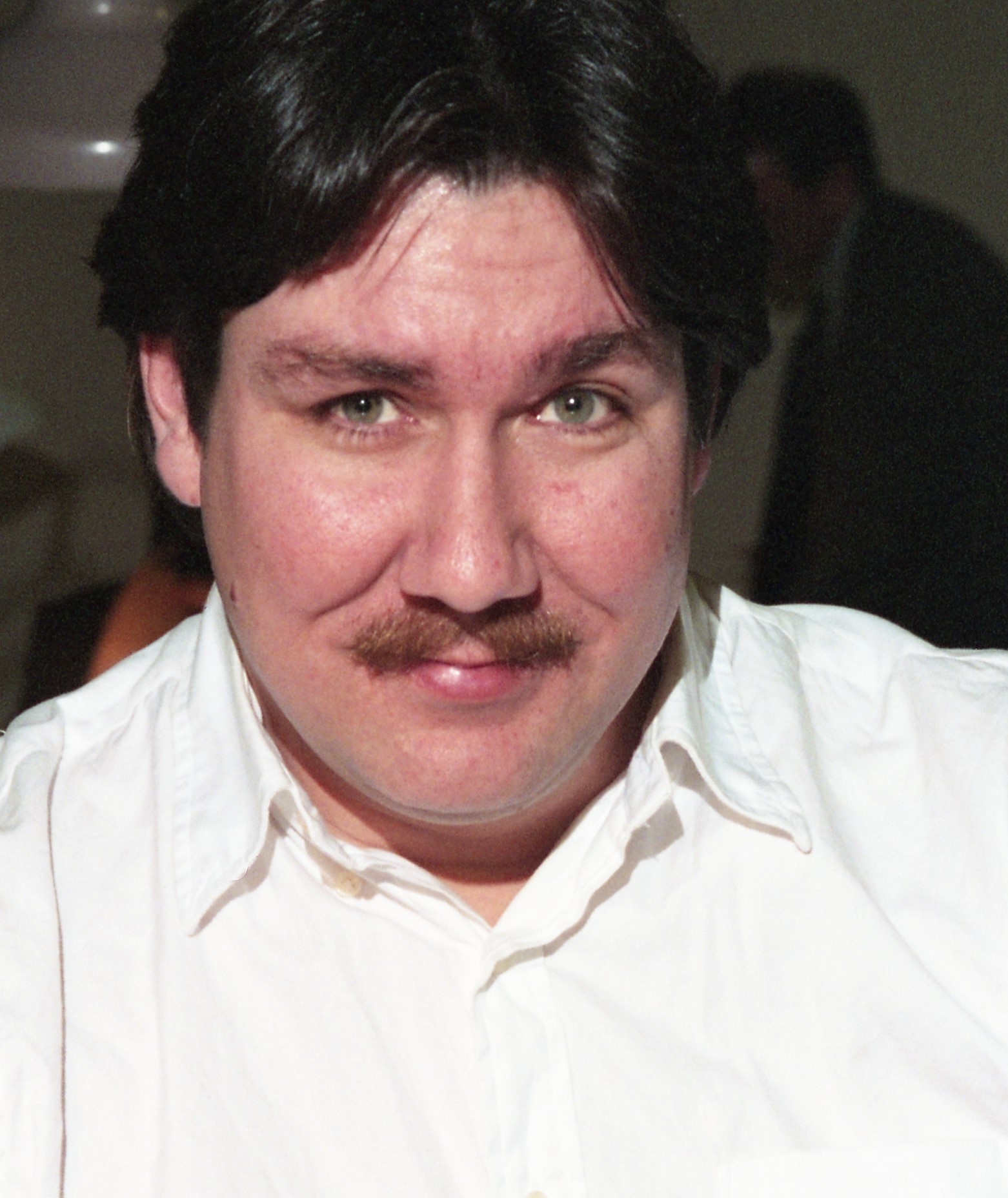
Photo: Collection of the World Chess Hall of Fame
In recent years, Christiansen has also taken part in senior tournaments with considerable success, including the World Senior Team Championships.
Larry Christiansen’s wife Natasha, a lawyer by profession, is also a strong chess player.
Larry Christiansen is the author of the books Storming the Barricades (2000) and Rocking the Ramparts (2004).
Looking for an opening that gets your opponents thinking on move one? Grandmaster Andy Woodward has relied on 1.b3 for years in blitz and bullet, using it to defeat strong masters and grandmasters who underestimated its hidden venom. While many players dismiss the opening as harmless, they often find themselves caught in unfamiliar positions, tactical traps, and uncomfortable middlegames. This compact course is designed specifically for practical play. Instead of overwhelming you with endless theory, it focuses on the critical lines, typical plans, and recurring tactical ideas that matter most when the clock is ticking.
Free video sample: Introduction
Free video sample: King’s Indian Setup