


For the first time in three years, the late-winter air in South Florida feels a little stagnant. After two consecutive runs to the Stanley Cup Final, the Florida Panthers arrived at the 2026 trade deadline not as the aggressors hunting for the final piece of a championship puzzle, but as a group of bystanders.
If you were expecting a blockbuster to save a sinking ship, you were likely disappointed. General Manager Bill Zito, usually one of the most aggressive executives in the league, opted for a whisper rather than a roar. In a season defined by the training room rather than the scoreboard, the Panthers’ deadline strategy was a sobering admission of where they truly stand in the Atlantic Division hierarchy.
Trimming the Blue Line
The most notable departure was veteran defenseman Jeff Petry. At 38, Petry was brought in to provide a steady hand and veteran presence, but the reality of his age and the team’s struggles made him an obvious trade candidate.
Moving Petry to the Minnesota Wild for a conditional seventh-round pick is the definition of a “housekeeping” move. If Minnesota catches lightning in a bottle and Petry plays a significant role in a deep Western Conference run, that pick could slide up to a fifth-rounder.
For Florida, this wasn’t about the return; it was about clearing a roster spot and letting a veteran chase a Cup elsewhere while the Panthers navigate a lost spring. Petry’s eight assists this season weren’t moving the needle, and his departure signals a shift toward evaluating younger assets in the season’s final weeks.
Low-Risk Depth Charges
In terms of incoming talent, the additions were modest. Vinnie Hinostroza arrives from Minnesota for “future considerations”—essentially a free look at a player who can still burn through the neutral zone. Hinostroza isn’t going to fix a power play, but he provides a specific type of north-south speed that the Panthers’ bottom six has lacked during this injury-riddled campaign.
Related – Panthers Should Focus on Resting for Next Season
Complementing that move was the waiver claim of Cole Reinhardt from the Vegas Golden Knights. At 26, Reinhardt is a “glue guy” with another year left on his contract. He’s the kind of low-cost, high-effort depth piece that allows a team to fill out a roster without dipping into the salary cap reserves needed for the off-season. Neither move moves the needle for 2026, but they provide insurance for a roster that has been stretched thin by the medical staff’s workload.
The Bobrovsky Conundrum
Perhaps the biggest news of the deadline was what didn’t happen. Despite a season that would be described as “rough” by even his most ardent supporters, Sergei Bobrovsky remains a Panther.
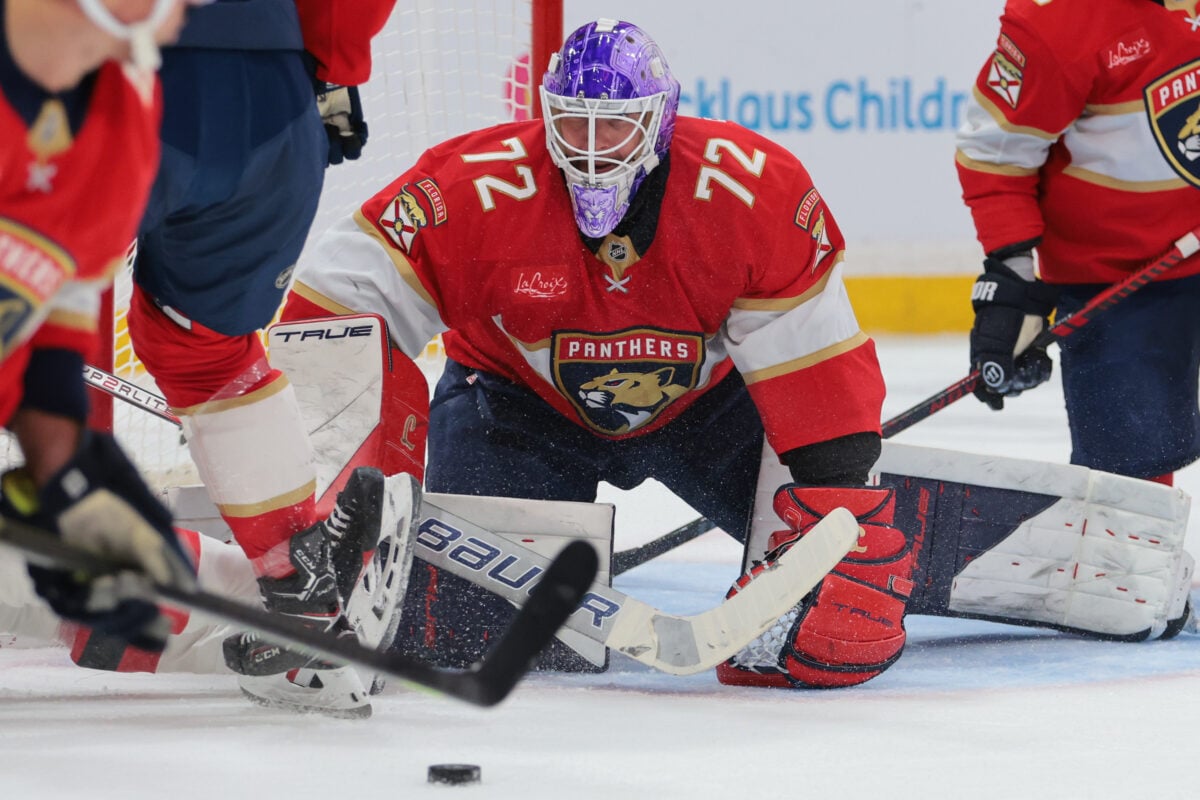
The two-time Cup winner is currently posting his least productive numbers in years, allowing significantly more goals than the league average and struggling to find the “Officer Bob” consistency that defined the last two years. Yet, the front office isn’t just keeping him; they are reportedly talking extension.
To the casual observer, this seems counterintuitive. However, for a front office that values culture and locker room stability, Bobrovsky is still viewed as the spiritual anchor of the team. Zito is betting that this season is a statistical outlier caused by a porous, injury-depleted defense in front of him, rather than a permanent decline.
Realistic Expectations vs. Playoff Dreams
Let’s be blunt: the math is not in Florida’s favor. Sitting 11 points out of a playoff spot with a negative goal differential, the Panthers are essentially “mathematically alive” but functionally dead in the water.
Related – 5 Worst Trades of the 2026 NHL Trade Deadline
The oddsmakers have reacted accordingly. Before the deadline, there was a lingering “what if” factor that kept Florida’s championship odds at a respectable +3300. After a quiet deadline, those odds plummeted to +12500. This is the largest shift for any team that didn’t explicitly “sell” their stars, reflecting a consensus that the window for a 2026 run has officially slammed shut.
“We are being realistic about the final 20 games,” Bill Zito noted post-deadline. “We won’t quit, but we aren’t going to mortgage the future for a short-term fix that isn’t there.”
The Long Game: Why Fans Shouldn’t Panic
While this season feels like a hangover after a two-year party, the fundamental structure of the Florida Panthers remains elite. This wasn’t a “fire sale” because the core is still very much in its prime.
- Aleksander Barkov and Matthew Tkachuk remain among the league’s premier duos.
- Sam Reinhart and Sam Bennett are locked into long-term deals.
- The defensive core, when healthy, is built for modern playoff hockey.

The decision to stand pat was an exercise in discipline. In previous eras, the Panthers might have traded a first-round pick for a rental just to make a desperate push for the eighth seed. Instead, Zito is protecting his assets, knowing that with a full off-season to heal and a few targeted signings, this team should be right back in the mix by October 2026.
This deadline was a bitter pill for a fan base accustomed to June hockey, but it was the right move. The 2026 Panthers are victims of the “short summer” effect—two years of playing 20+ extra games finally caught up to their bodies. By choosing not to “sell the farm” for a miracle that wasn’t coming, the front office has ensured that this down year is merely a pit stop, not a dead end.
AI tools were used to support the creation or distribution of this content, however, it has been carefully edited and fact-checked by a member of The Hockey Writers editorial team. For more information on our use of AI, please visit our Editorial Standards page.
