
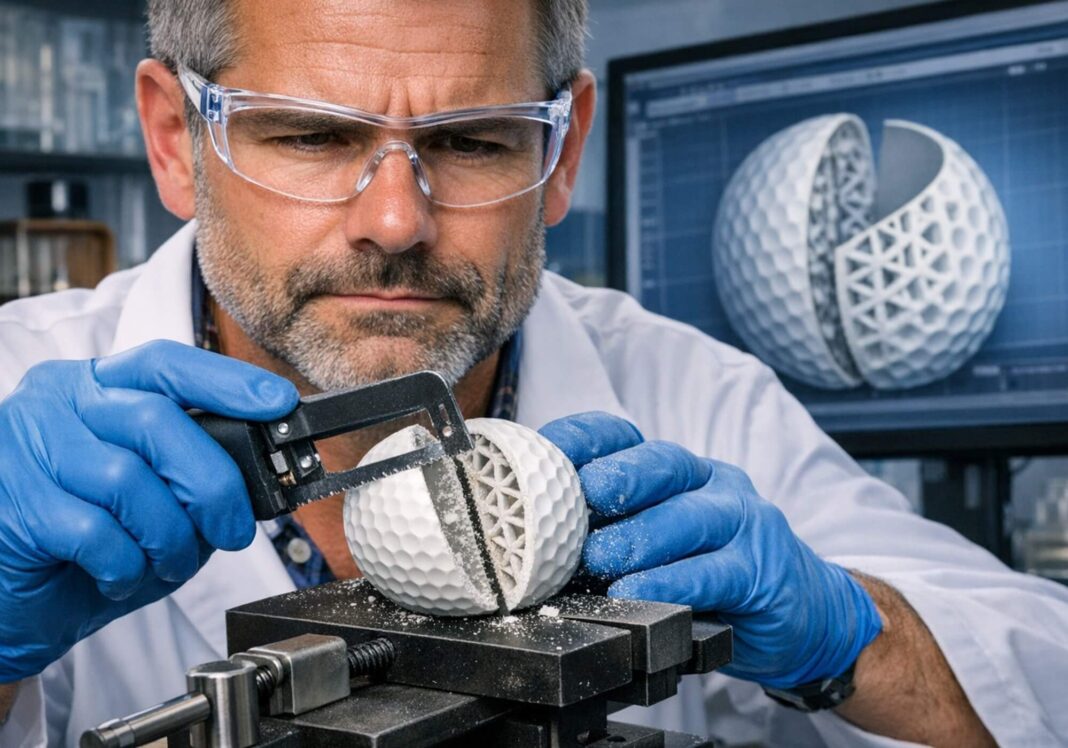

In a stunning twist no one asked for—but everyone is now debating—a small Midwest startup has announced that its fully 3D‑printed golf ball has become the first ball to meet the USGA’s upcoming rollback distance standards.
Not through years of materials science, wind‑tunnel testing, or tour validation.
But because it simply doesn’t fly very far.
“We Didn’t Design It to Be Short. We Just… Printed It.”
The company, LayerLine Labs of Adelcrombie, Indiana, began as a weekend side project exploring whether modern consumer 3D printers could replicate the complex aerodynamics of a traditional golf ball. Early prototypes looked promising—at least visually—featuring 332 dimples, a seamless shell, and a finish described by testers as “surprisingly confident.”
Then came the performance testing.
“Our first test drive went about 173 yards,” said founder and self‑described CAD enthusiast Mark Holloway. “Downwind.”
Initial disappointment quickly turned into opportunity when Holloway noticed the timing.
“With the USGA announcing distance rollbacks for elite competition, we realized—wait a minute—this might already qualify.”
USGA Testing: “Technically Acceptable, Emotionally Confusing”
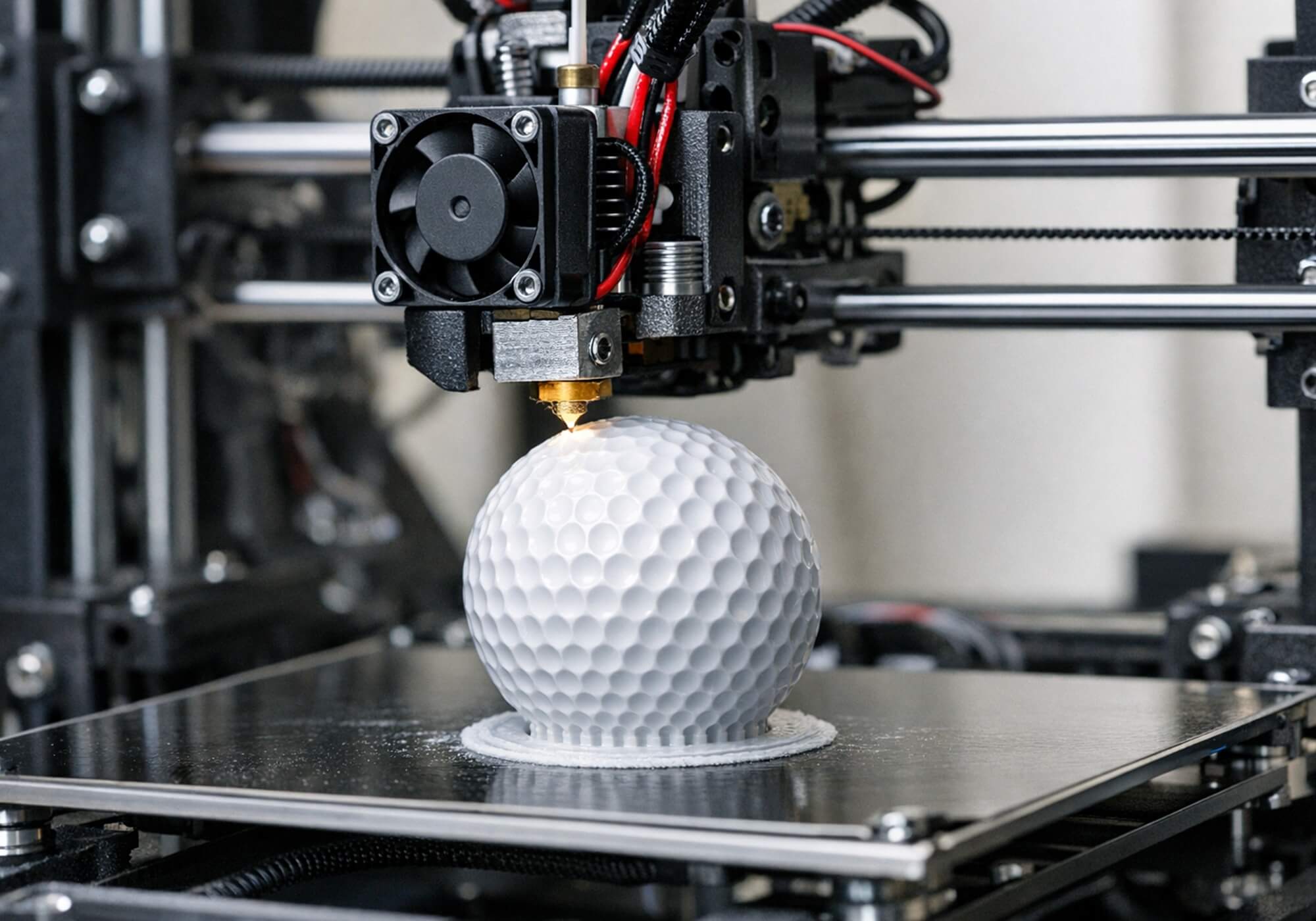
According to LayerLine Labs, the ball was submitted to an independent testing facility using a USGA‑conforming robot swing at 117 mph.
Results showed:
- Average carry: 183 yards
- Peak height: “Noticeable”
- Spin rate: “It had one”
- Coefficient of restitution: “Lower than expected but admirable for plastic”
While no official statement has been released, a source familiar with the testing described the experience as “quiet,” “brief,” and “followed by a long pause.”
“One of the engineers reportedly asked, ‘Is this thing hollow?’ and then asked again, more softly.”
USGA officials, when asked for comment, replied simply with wry smiles and knowing nods. One USGA official, who requested anonymity to keep from getting fired, replied with a sly wink, saying “this is exactly what we had in mind.”

Revolutionary Materials (Available at Your Local Hardware Store)
Unlike traditional golf balls with proprietary urethane covers and multi‑layer cores, the LayerLine ball is made from door-stop grade TPU purchased at the local Ace Hardware store and then ground up and melted.
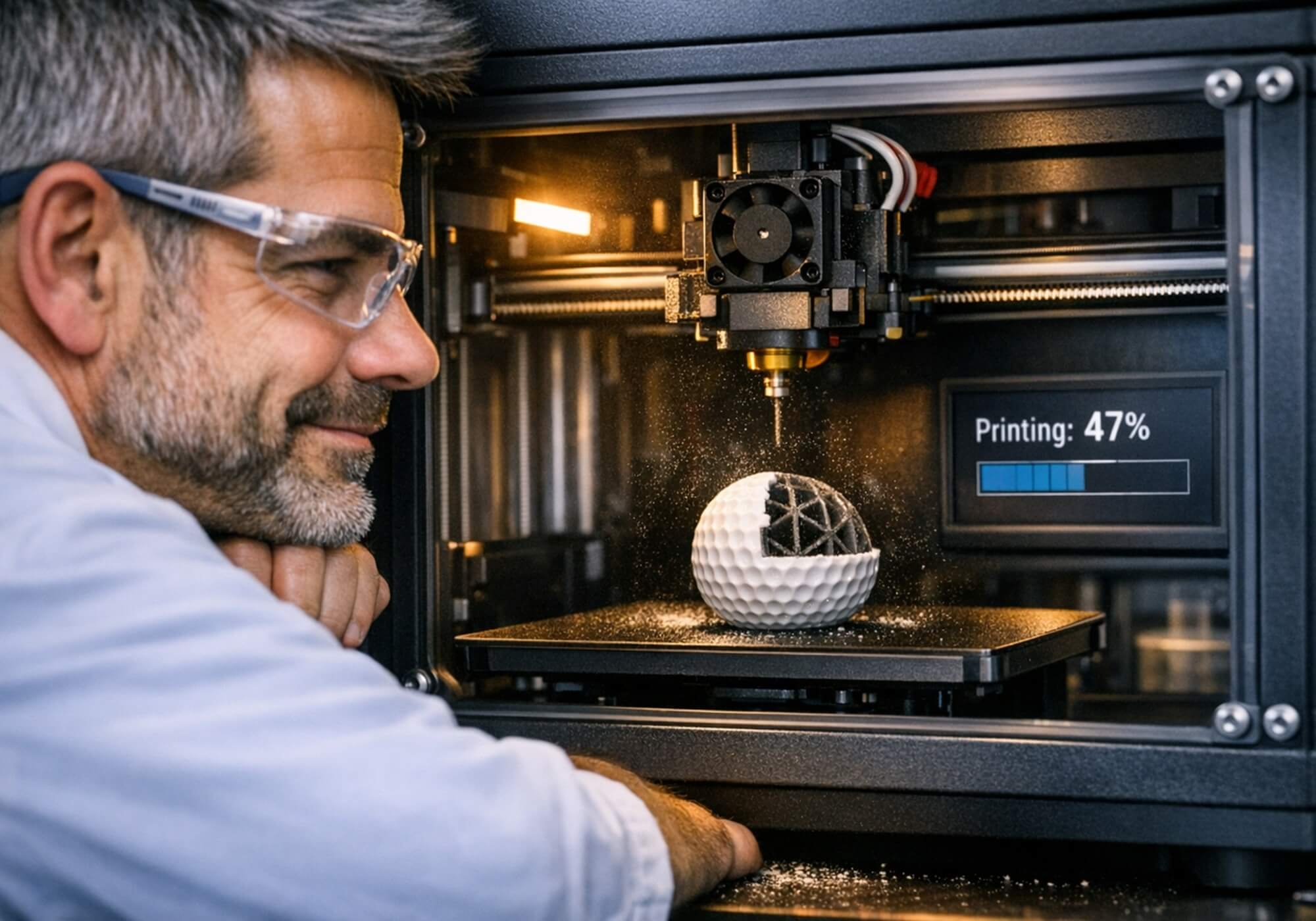
Printed in two hemispheres, the LayerLine ball is then glued together using what the company describes as “a very confident amount of cyanoacrylate,” also sourced at the local Ace supplier under the trade name “Gorilla Glue.”

Dimples are printed directly into the surface, resulting in what Holloway calls “honest dimples.”
“They don’t cheat and they don’t overperform. They promise nothing and actually deliver on that promise.”
Player Reactions Range From Polite to Spatially Aware
Early prototype samples were quietly distributed to a handful of low‑handicap golfers and instructors.
Feedback included:
- “Feels… educational.”
- “I learned a lot about my swing path because the ball never left my field of vision.”
- “Honestly great for hitting wedges when I don’t want to lose another Pro V1.”
- “First driver I’ve hit in years that I actually heard land.”

One former tour player, also speaking on the condition of anonymity, summed it up best:
“I could play a full round and never worry about running out of balls. I’d also never worry about outdriving anyone.”
The Perfect Rollback Solution?
While the USGA’s distance rollback has sparked concerns about course length, equipment cost, and historical continuity, LayerLine believes additive manufacturing may offer a simpler answer.
“Our ball doesn’t need restrictions,” Holloway explains. “It self‑polices.”
He also believes the company’s 3D-printed golf ball will cure golfers of thinking they hit the ball farther than they really do.

“There’s no way any golfer’s self-inflated sense of self can survive hitting this ball. It has a built-in ego crusher.”
Another benefit is that it would slow the rising price of drivers. “You could hit this thing with a zillion-dollar driver and still won’t go very far,” says Holloway.
Coming Soon: The “Tour+” Model (Accidentally Worse)
LayerLine confirmed it is already working on a premium version of the ball using higher density TPU, reground from squeegee blades, shower door seals and other materials derived from the same premium, Tour-grade urethane compound used in non-marking shop caster wheels.
Early tests show distance decreased slightly, but with “more authority.”
“We think the extra mass is really helping it fall faster.”
What’s Next?
The company is actively exploring:
- A practice‑only approval category.
- Subscription-based models labeled by handicap and polo shirt brand.
- A biodegradable ball that decomposes before it slices into the woods.
- A potential partnership with TaylorMade.
What about official conformity?
“We’re not saying it’s legal,” Holloway says. “We’re just saying it meets the goal.”
Whether LayereLine will actually apply for USGA approval remains to be seen, but Holloway is proud of his company’s pioneering work.
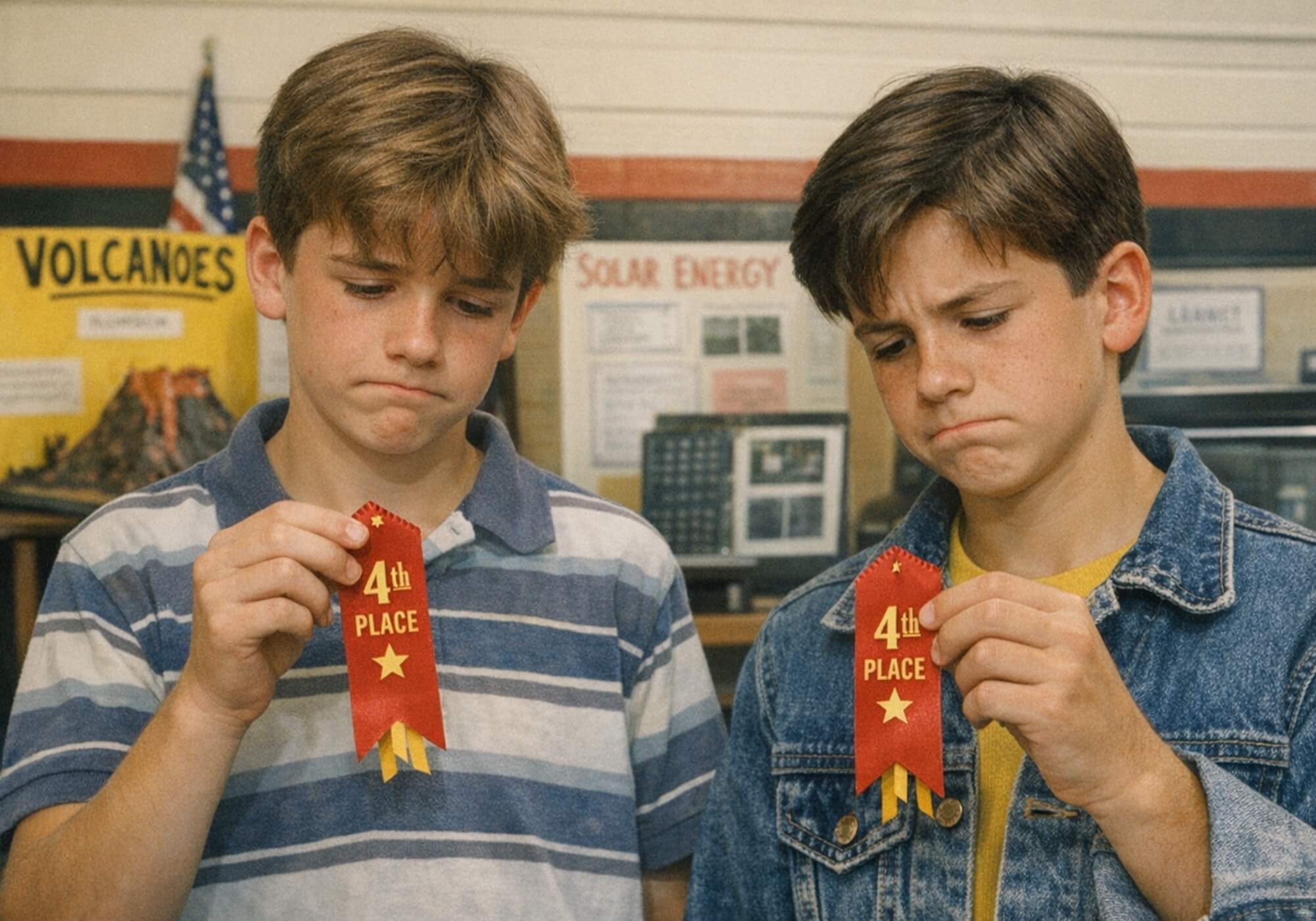
“My partner and I have been best friends since we tied for 4th place in our middle school science fair,” he tells MyGolfSpy. “Being able to create a 3-D printed golf ball that can literally turn a modest Par 3 into a difficult Par 4 is a proud moment for us.
“We can wait to inflict this ball on golfers everywhere.”
The post Industry First: 3D‑Printed Golf Ball Becomes First to Comply With USGA Rollback appeared first on MyGolfSpy.