


A two-point lead with four rounds to go
Javokhir Sindarov continued to impress at the Candidates Tournament in Cyprus, scoring a convincing victory over Praggnanandhaa Rameshbabu in round ten.
Entering the day with a 1½-point lead, the Uzbek grandmaster did not attempt to steer the game towards safety. Instead, he willingly entered a sharp and complex position out of the opening, accepting an imbalanced material distribution and dynamic play. This approach has characterised his tournament so far – strong preparation combined with confident, aggressive and tactically alert play – and it paid off once again, as Pragg committed a tactical error in a complex position, which Sindarov immediately exploited to obtain a winning position.
22…Bd7?? was the losing mistake, as it allows 23.Rf7! Qxf7 24.Rxf7 Kxf7 25.Qf4+ Kg7 (protecting the rook)…
…and now White grabs the bishop after 26.Qg5+ Kh7 27.Qe7+ Kg8 28.Qxd7
The victory, Sindarov’s sixth of the event, restored his lead to two points (as a few rounds ago) with four rounds remaining.
Become a master of chess strategy – get Robert Ris’s complete bundle now at a special price!
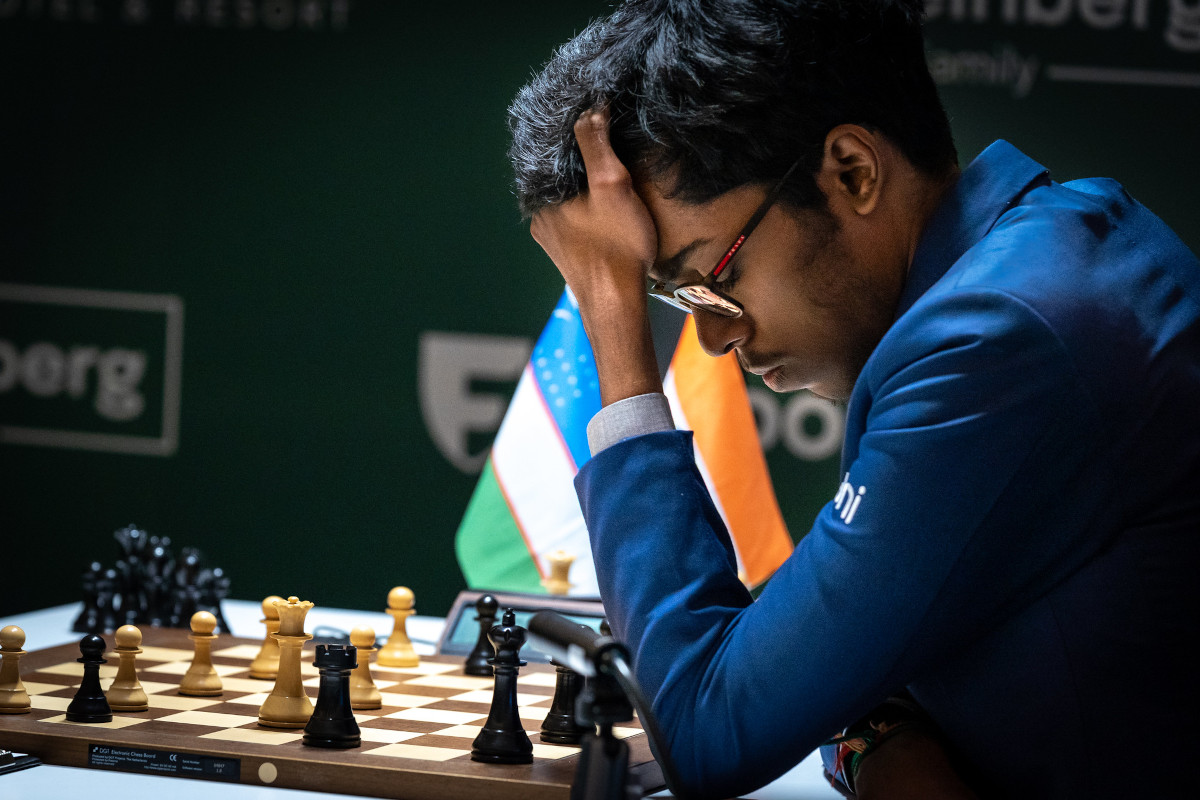
Praggnanandhaa Rameshbabu after having blundered the game away and before resigning the game | Photo: FIDE / Niki Riga
The remaining three games of the round all ended in draws, and none of them saw major swings in evaluation. Anish Giri, who is Sindarov’s closest pursuer, needed a strong finish to keep realistic chances of catching the leader. A win with white against Hikaru Nakamura would have been particularly valuable in that regard, but Nakamura adopted a solid and controlled approach from the outset.
Nakamura opted for the uncommon 3…h6 in a Queen’s Gambit Declined, but the strange decision did not lead to either player managing to create real winning chances.
Although engines later pointed to a possible continuation involving 23.Ng5 followed by 24.Nf3 as offering White a slight edge, this line proved difficult to find over the board.
The game ultimately ended after 36 moves in a draw by perpetual check.
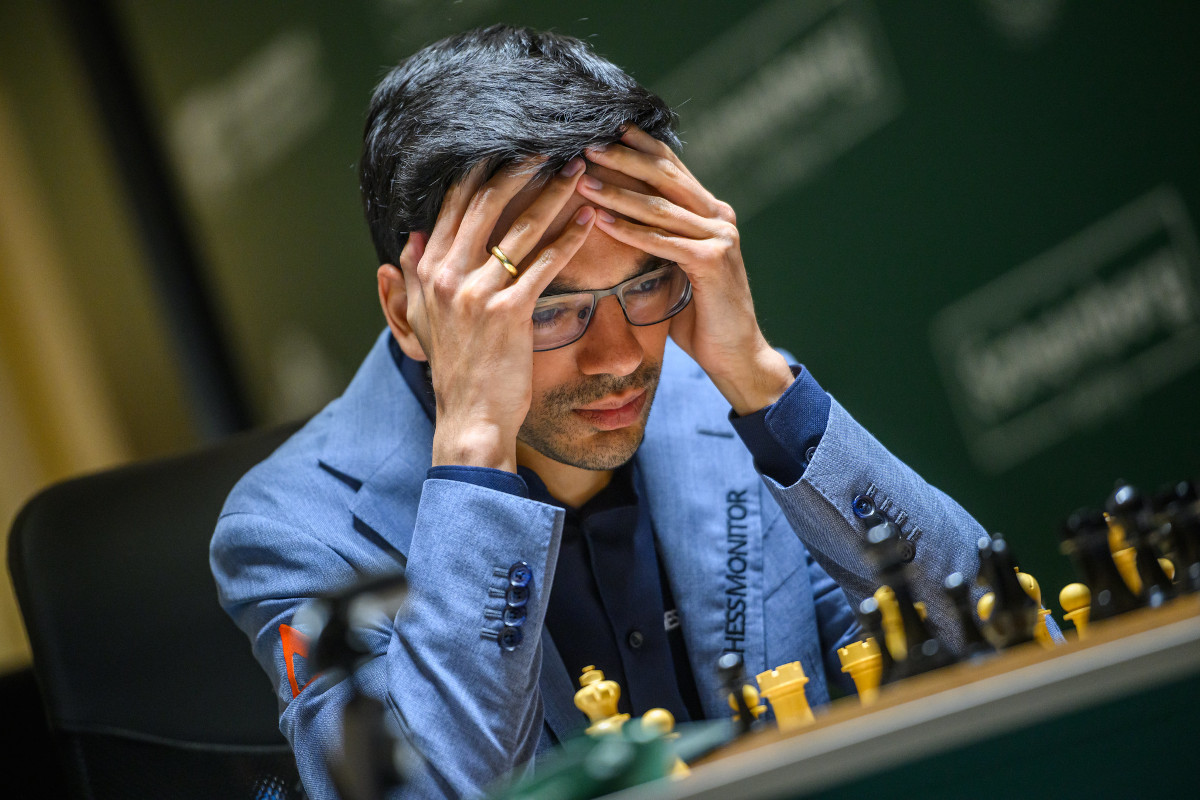
Anish Giri | Photo: FIDE / Michal Walusza
The encounter between Wei Yi and Fabiano Caruana was also relatively uneventful. Wei opened with 1.e4, and Caruana replied with the French Defence. After 2.d4 d5 3.Nc3 Bb4, Wei chose 4.Nge2, avoiding the sharp theoretical debates of the Winawer Variation. This allowed Caruana to equalise without difficulty. The balance of the position remained intact throughout the middlegame, and the players soon reached an endgame in which neither side could make progress. A draw was agreed after 39 moves. As a result, Caruana now stands three points behind the leader, while Wei is a further half-point back.
In the game between Andrey Esipenko and Matthias Bluebaum, Black likewise had little difficulty achieving equality. Esipenko opted for a sideline against Bluebaum’s solid Petroff Defence, but was unable to create any pressure. Bluebaum neutralised White’s ideas and guided the game towards simplification, with both players exchanging pieces and agreeing to a draw after 40 moves. The result marked Bluebaum’s ninth draw in ten rounds, while Esipenko remains at the bottom of the standings on 3½ points.
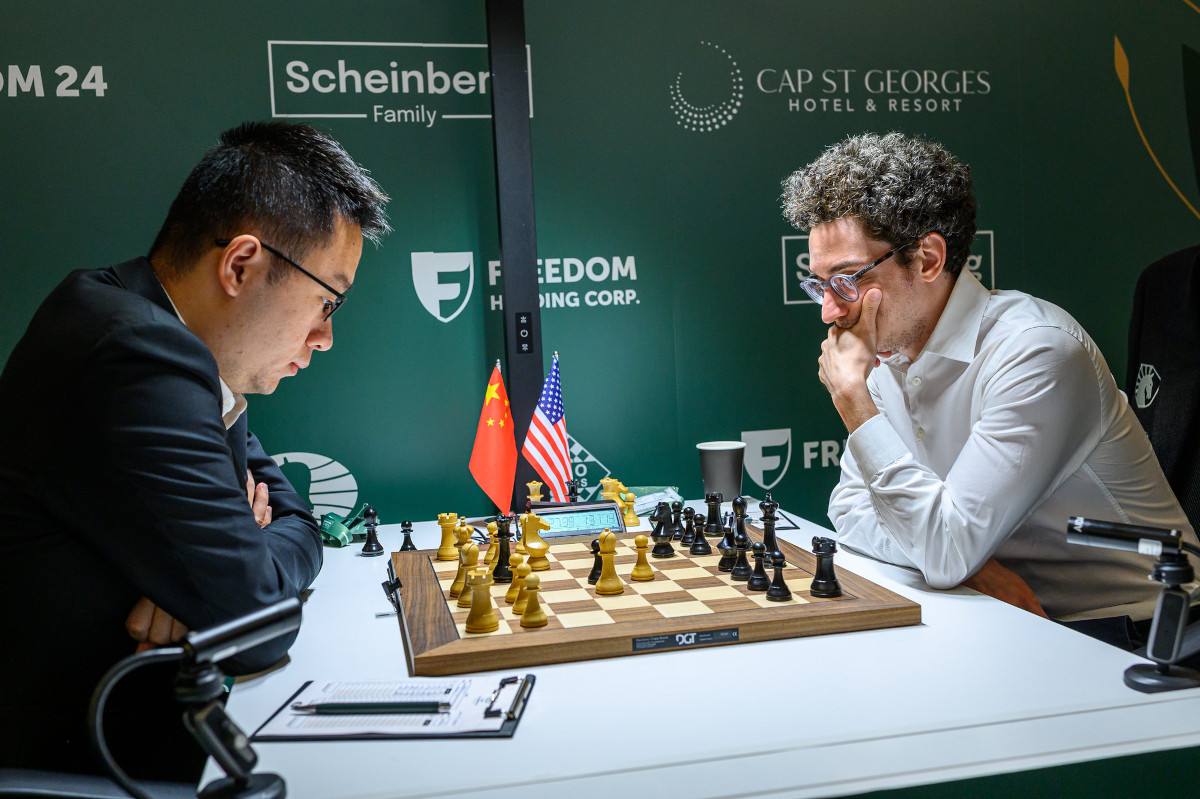
Wei Yi facing Fabiano Caruana | Photo: FIDE / Michal Walusza
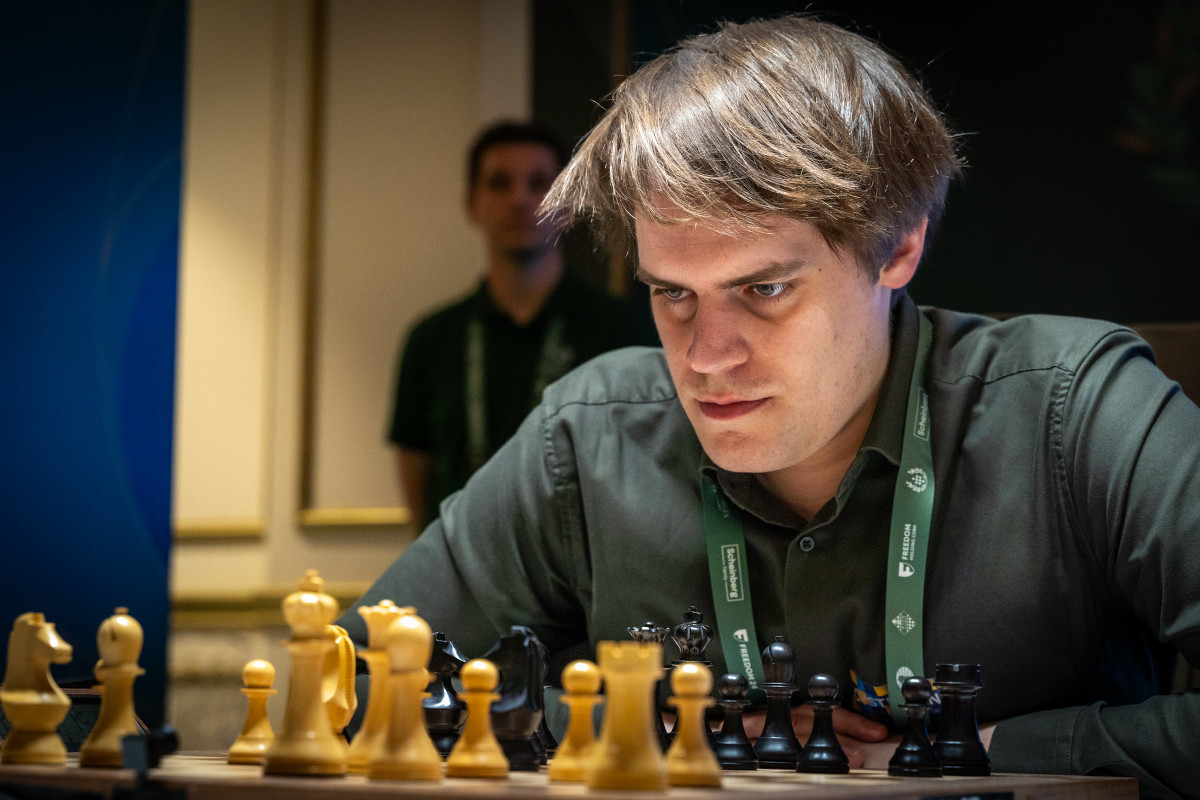
Matthias Bluebaum has drawn nine out of ten games so far in Cyprus | Photo: FIDE / Niki Riga
Sindarov’s performance after ten rounds stands out in the modern Candidates era. With six wins already, he has exceeded the largest winning totals seen in the seven editions of the tournament being played as a double round-robin.
All previous winners scored between 8½/14 and 9½/14 points – i.e. plus-three to plus-five. Sindarov is therefore on course to surpass that benchmark, even if he adopts a more cautious approach in the remaining rounds and draws all four of his games – although his play so far suggests he is not inclined to do so.
The London System is one of the most popular openings at every level of chess but not all Londons are the same. In this course, Grandmaster Elisabeth Pähtz presents the London System, a structured and ambitious approach based on the immediate Bf4, leading to rich and dynamic positions.
Free sample video: Introduction
Free sample video: 5…cxd4 6.exd4 Qb6 sidelines
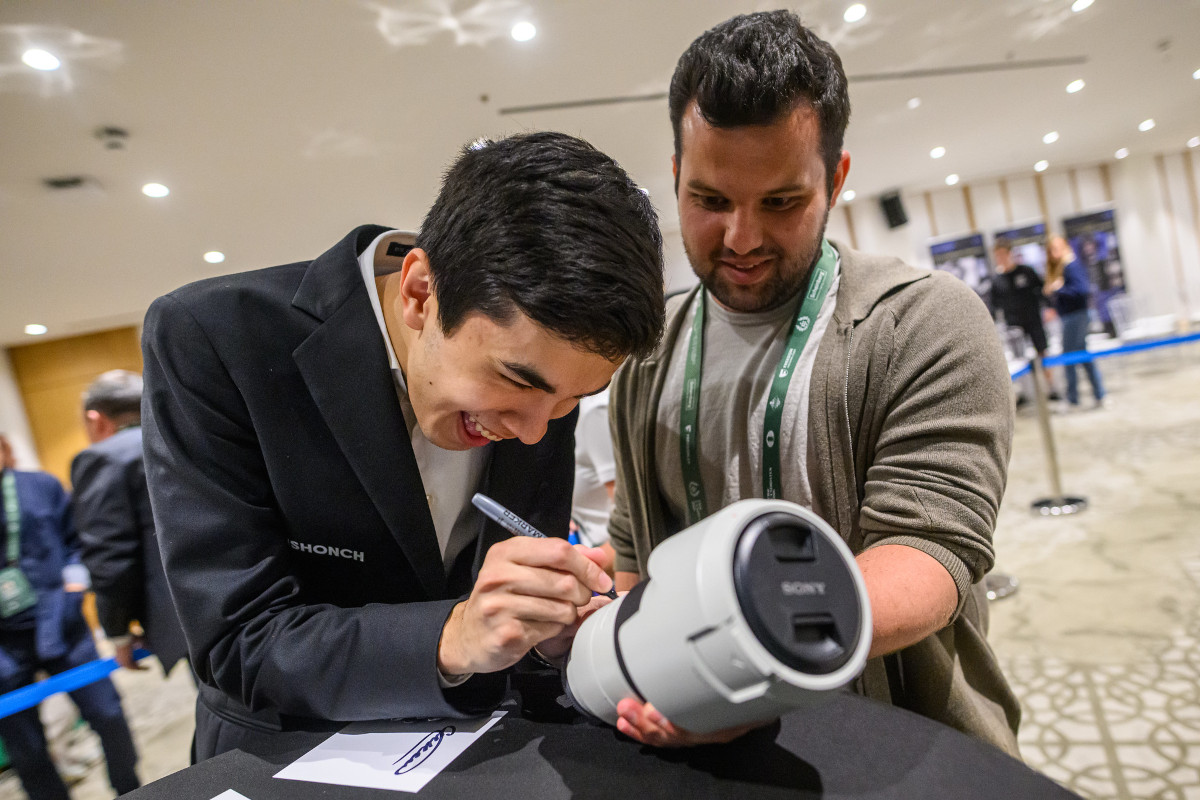
Only an unlikely meltdown will prevent Javokhir Sindarov from becoming the next challenger for the World Championship title | Photos: FIDE / Michal Walusza
Standings after round 10
All games
In this video course, experts including Dorian Rogozenco, Mihail Marin, Karsten Müller and Oliver Reeh, examine the games of Boris Spassky. Let them show you which openings Spassky chose to play, where his strength in middlegames were and much more.