

Day 1
On July 27–28, ten of the world’s leading grandmasters will compete in the US debut of WR Chess’ head-to-head national team rapid and blitz format. Using the classic Scheveningen format, every player on Team USA will face every player on Team Uzbekistan.
This compact course is designed specifically for practical play. Instead of overwhelming you with endless theory, it focuses on the critical lines, typical plans, and recurring tactical ideas.
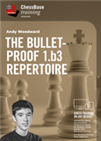
Looking for an opening that gets your opponents thinking on move one? Grandmaster Andy Woodward has relied on 1.b3 for years in blitz and bullet, using it to defeat strong masters and grandmasters who underestimated its hidden venom. While many players dismiss the opening as harmless, they often find themselves caught in unfamiliar positions, tactical traps, and uncomfortable middlegames. This compact course is designed specifically for practical play. Instead of overwhelming you with endless theory, it focuses on the critical lines, typical plans, and recurring tactical ideas that matter most when the clock is ticking.
Free video sample: Introduction
Free video sample: King’s Indian Setup
Looking for an opening that gets your opponents thinking on move one? Grandmaster Andy Woodward has relied on 1.b3 for years in blitz and bullet, using it to defeat strong masters and grandmasters who underestimated its hidden venom. While many players dismiss the opening as harmless, they often find themselves caught in unfamiliar positions, tactical traps, and uncomfortable middlegames. This compact course is designed specifically for practical play. Instead of overwhelming you with endless theory, it focuses on the critical lines, typical plans, and recurring tactical ideas that matter most when the clock is ticking.
Free video sample: Introduction
Free video sample: King’s Indian Setup
- Team USA: Hikaru Nakamura, Fabiano Caruana, Wesley So and Levon Aronian, with Leinier Dominguez as reserve.
- Team Uzbekistan features Javokhir Sindarov, Nodirbek Abdusattorov, Nodirbek Yakubboev and Shamsiddin Vokhidov, with Mukhiddin Madaminov as reserve.
Rounds
Phase 1: rapid chess, 4 rounds
Phase 2: blitz chess, 8 rounds – each round with four games counts as one match
Time control
Rapid chess: 15 minutes + 10-second increment from move one (G/15+10)
Blitz: 3 minutes + 2-second increment from move one (G/3+2)
Tiebreak
Board points; if the score is still tied, a single Armageddon game (White 4’+2″, Black determined by time bidding – a draw counts as a win for Black)
Download the full regulations (PDF)
Live games and commentary
The Benoni family of openings has toppled world champions, decided match games under the highest pressure, and rewarded those brave enough to play them with some of the most electrifying chess imaginable. In this Fritztrainer, Grandmaster Ivan Sokolov – continuing his successful series “Understanding Middlegame Structures” – takes you deep inside the complexities of the Colour-Reversed Benoni, the Colour-Reversed Benko Gambit, and the Colour-Reversed Blumenfeld Gambit.
Free sample video: Introduction
Free sample video: Colour Reversed Banoni – Game 1