

Predictions are easy when they amount to Connor McDavid being great or Leon Draisaitl scoring a lot of goals. The fun begins when the outcome requires taking a real chance.
The Edmonton Oilers enter 2026-27 with enough uncertainty to make a few aggressive calls worth considering. Head coach Mike Babcock has a crowded forward group to organize, three goaltenders fighting for starts and an offensive defenceman coming off one of the most productive seasons at his position in recent memory.
None of the following outcomes should be considered likely enough to bet the house on. All three, however, have enough evidence behind them to move beyond pure offseason fantasy.
1. Kasperi Kapanen Scores 20 Goals and Keeps a Top-Six Job
Kasperi Kapanen has reached the 20-goal mark once in his NHL career, recording a career-high 20 goals and 44 points with the Toronto Maple Leafs during the 2018-19 season. Predicting him to return to that level eight seasons later is still aggressive, especially after several inconsistent and injury-affected campaigns, but his recent production with Edmonton gives the possibility some credibility.
Kapanen recorded eight goals and 17 points in only 41 games for Edmonton during the 2025-26 season, with injuries preventing him from building much regular-season momentum. He then became one of the Oilers’ most dangerous forwards in the playoffs, scoring four goals and recording six points in six games while averaging 17:53 of ice time. His playoff review showed that Edmonton trusted him more as the series progressed.
The 20-goal prediction becomes considerably more believable when his linemates enter the discussion. Kapanen, Draisaitl and Vasily Podkolzin have played 226 five-on-five minutes together over the past two regular seasons. According to recent line data, Edmonton has outscored opponents 15-6 during those minutes while controlling 54.5% of expected goals, 52.7% of shot attempts and 56.3% of scoring chances.
The postseason numbers were even better. In 88 five-on-five playoff minutes together, the trio outscored opponents 7-0 while controlling 61.3% of expected goals. THW also identified the combination as Edmonton’s best line during its first-round series against the Anaheim Ducks.
There is some finishing luck inside those results, particularly the 71.4% regular-season goal share, but the underlying numbers remain comfortably positive. This is not a line surviving entirely on an unsustainable shooting percentage.
Kapanen fits because he does not require extended puck possession to contribute. Draisaitl can dictate the offensive sequence, Podkolzin can retrieve pucks and create pressure below the goal line, while Kapanen uses his speed to attack open space and become available around the net.
Babcock will have other options. Isaac Howard could push for top-six minutes, Matt Savoie deserves significant offensive opportunities, and McDavid with Draisaitl will always remain available when Edmonton wants to load up one line.
Kapanen should get the first chance to lose the job rather than being forced to win it again. An 84-game schedule also provides more runway, provided he stays healthy. Give Kapanen 70-plus appearances beside Draisaitl and Podkolzin, and reaching 20 goals becomes far less outrageous than it appears when looking only at his recent season totals.
The bold part is not believing he can score 20. It is predicting that Babcock leaves him in the top six long enough to get there.
2. Devon Levi Finishes With the Most Oilers Starts
Edmonton’s goaltending room looks like a committee in August. My prediction is that it stops looking like one by spring.
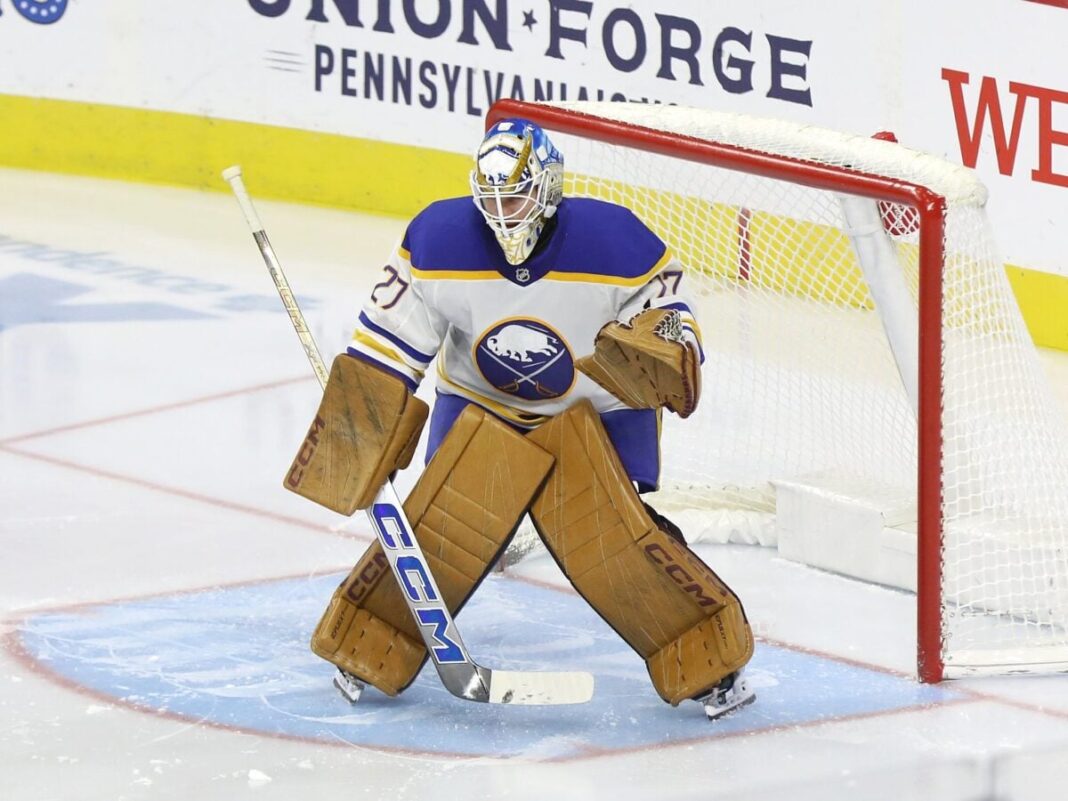
The Oilers acquired Devon Levi and a 2028 seventh-round pick from the Buffalo Sabres for a 2028 third-round selection on July 1. The 24-year-old spent the entire 2025-26 season in the American Hockey League (AHL), going 23-20-9 with a 2.83 goals-against average (GAA) and .904 save percentage (SV%) for the Rochester Americans. His broader AHL résumé is much more impressive, with a .914 SV% across 120 appearances.
His NHL record is why this qualifies as bold. Levi had only 36 career starts for Buffalo, producing a 3.29 GAA and .894 SV%. Nothing about those numbers says Edmonton should immediately make him its starter.
The alternatives leave the door open. Tristan Jarry remains the highest-paid goaltender in the group but finished his first Edmonton season with an .858 SV% in 19 appearances. Frederik Andersen arrives with vastly more experience and a Stanley Cup championship from the Carolina Hurricanes, but he is 36.
Andersen told Edmonton’s official site that he is comfortable being part of a goalie rotation, emphasizing the need to keep everyone fresh through the longer schedule. That sounds much more like a veteran prepared to share starts than someone expecting to play 55 games.
Levi does not need to win the job in October. In fact, Edmonton would be better served allowing the competition to develop naturally.
Andersen can receive important starts early, while Jarry gets a legitimate opportunity to prove that his difficult finish was an aberration. Levi can begin with a lighter workload and force the coaching staff to adjust if his performance warrants more.
That is where this prediction gets interesting. Young goaltenders can change a hierarchy quickly because coaches have little incentive to suppress results at that position. If Levi begins outperforming Jarry and Andersen, Babcock will have a difficult time explaining why the 24-year-old should remain third in the rotation simply because the other two possess longer résumés.
THW’s recent newcomer ranking placed Levi behind Andersen in immediate importance but identified him as Edmonton’s potential long-term answer. Those two ideas do not have to remain separate for the entire season.
The number required to lead Edmonton in starts may also be lower than usual. If Andersen receives roughly 25 to 30 games and Jarry never completely claims the crease, Levi could finish first without approaching a traditional starter’s workload. Something in the range of 32 to 35 starts might do it.
Edmonton acquired Levi because general manager (GM) Stan Bowman believes he is ready for a larger NHL opportunity. My prediction is that by March, “larger opportunity” has turned into the biggest workload of the three.
3. Evan Bouchard Becomes Oilers’ First 100-Point Defenceman Since Coffey
Evan Bouchard needs five more points than he recorded last season to enter territory Edmonton has not seen from a defenceman in four decades. That sentence makes this prediction sound almost conservative.
Bouchard recorded 21 goals and 95 points in 82 games during the 2025-26 season, leading all NHL defencemen in both assists and points. His total was 14 points ahead of the next-highest scoring blueliner, and NHL Network recently ranked him among the league’s top defencemen after the career season.
His season report reinforces how complete the offensive breakout was. Bouchard averaged a career-high 24:41, played all 82 games for the second consecutive season and established personal bests in goals, assists and points. The next number is 100.
Paul Coffey remains the last Oilers defenceman to reach it. He recorded an absurd 48 goals and 138 points in 79 games during the 1985-86 season, one of several dominant offensive performances he produced during Edmonton’s dynasty. The official Oilers record still has Coffey occupying the top of the franchise’s single-season defenceman scoring list.
Nobody is asking Bouchard to chase 138. Five additional points require a much smaller leap, especially considering Edmonton will play 84 games rather than 82. Bouchard also remains attached to the most favourable offensive environment an NHL defenceman could reasonably request.
McDavid and Draisaitl drive the power play. Bouchard runs it from the blue line, owns one of the league’s most dangerous shots and has developed into a high-end distributor rather than merely a player waiting to unload one-timers.
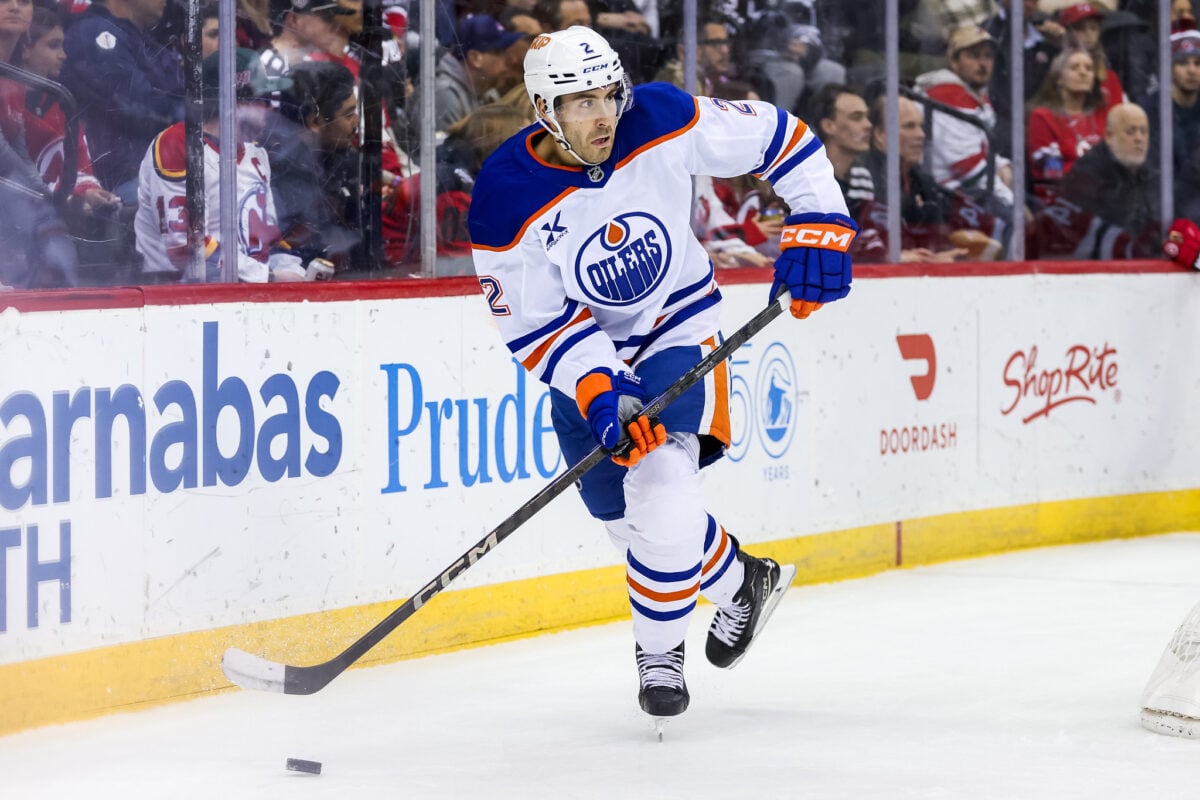
His 74 assists last season led every NHL defenceman. He also recorded 33 power-play points and 60 even-strength points, showing that his production was not entirely dependent on Edmonton’s stars drawing penalties.
The biggest obstacle may simply be regression. Ninety-five points is an enormous total for any defenceman, and expecting another increase after a career season is naturally aggressive. Cale Makar, Quinn Hughes, Zach Werenski and others demonstrate how difficult it is to remain near the top of the position every season.
Bouchard’s role gives him a chance to resist that decline. Edmonton did not add another offensive defenceman capable of threatening his first-unit power-play position, and the departure of Darnell Nurse could leave Bouchard handling even more responsibility at five-on-five. His four-year contract also places him squarely in his prime rather than approaching an age where decline should be expected.
The 100-point mark would carry significance beyond another personal best. NHL.com noted that Bouchard’s 95 points were already the most by an Oilers defenceman since Coffey’s 138 in 1985-86. Five more would officially end a 40-season drought.
Oilers Have Enough Uncertainty for Something Weird to Happen
Bold predictions should not be disguised versions of the obvious. McDavid recording 120 points is not bold, and Draisaitl reaching 40 goals would surprise almost nobody if he stays healthy.
Kapanen becoming a 20-goal top-six fixture requires health, deployment and chemistry to align. Levi leading Edmonton in starts requires a young goaltender with uneven NHL results to jump two established veterans. Bouchard reaching 100 points requires him to improve on a season that already led every NHL defenceman. Each outcome has a legitimate failure point, which is precisely why each is interesting.
The Oilers have spent the offseason creating competition rather than locking every role into place. Babcock will decide which forwards receive premium minutes, the crease could change hands several times, and Bouchard enters the season with one of the most intriguing individual statistical ceilings on the roster.
If even one prediction hits, Edmonton will have discovered something important. If all three happen, the 2026-27 Oilers probably look quite different by April than anyone expects in August.
Free Newsletter
Get Edmonton Oilers coverage delivered to your inbox
In-depth analysis, breaking news, and insider takes – free.
Subscribe Free →