
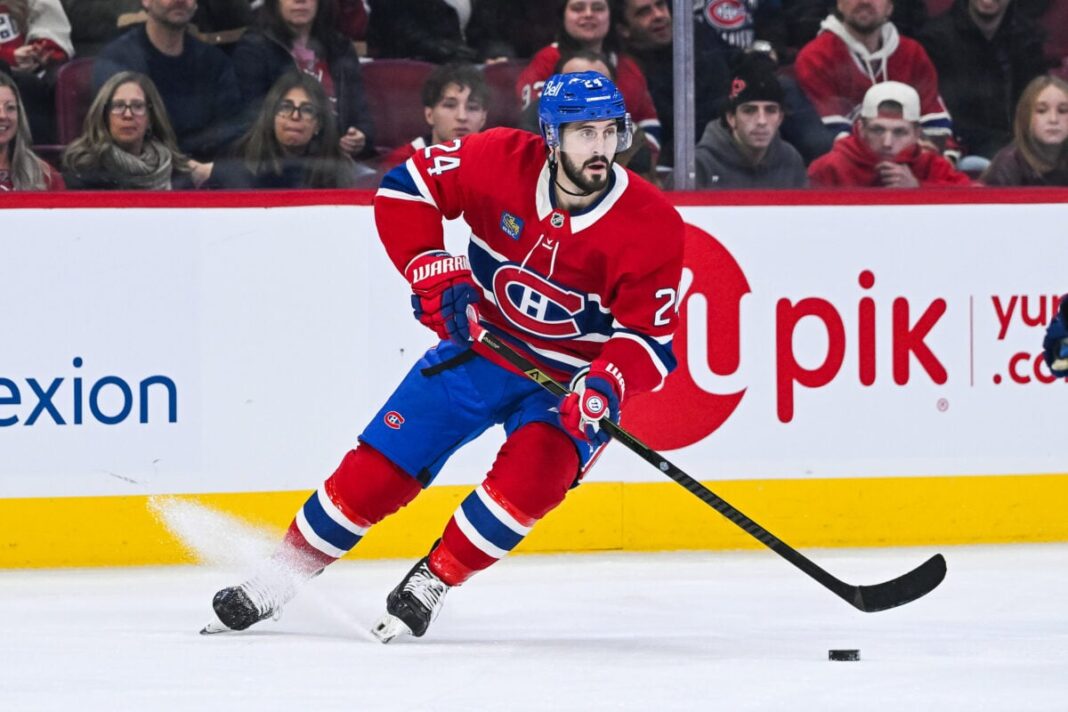

The Montreal Canadiens just ran into a better team. As far as heartbreaks go, the upstart Habs losing to the eventual-Stanley Cup champion-Carolina Hurricanes in Round 3, even in just five games, was fairly tame. It might have hurt in the moment, but, looking at the defeat as objectively as possible, it should be hard for fans to feel too badly over what cynics may have chosen to interpret as a huge missed opportunity.
In hindsight though, this was far from the 2021 Stanley Cup Final, when the Canadiens got similarly outclassed by the Tampa Bay Lightning in a five-game loss. Despite getting eliminated a full round earlier, the 2026 Habs seem to have a lot more going for them than the 2021 team, which fell to last place in the entire NHL the next season, following what amounted to a one-off brush with immortality.
So, while it’s certainly disappointing for the Canadiens to have gotten as far as they did only to have to do it all over again just to get back to the Eastern Conference Final, there should be some comfort in how they’re not starting from scratch. They can use the experience they gained in the defeat as a launching pad for greater success down the road, especially as a team that is still projected to be (at least among) the youngest in the NHL in 2026-27.
The moment itself may be tainted somewhat. However, it still represents a culmination of many other, purer feel-good moments in an unquestionably successful 2025-26.
Here are the top five:
Danault’s Return to Montreal
It admittedly wasn’t the warmest homecoming, but, four years after leaving the Canadiens to sign with the Los Angeles Kings, Phillip Danault returned via trade. The circumstances weren’t exactly ideal, in that he had been mired in a scoring slump, cost a second-round pick as a 33-year-old in offensive decline and has an arguably inflated $5.5 million cap hit through 2028… which is part of the reason he had left for supposedly greener pastures.
While he only enjoyed a modest uptick in production after rejoining the team last December, scoring six goals and 12 points in his 45 remaining regular-season games, he proved to have been worth the cost to acquire him and arguably his cost against the salary cap next season after he scored 10 points in the postseason (19 games). Of note, Danault never made it out of Round 1 with the Kings, whereas his four-season tenure there has effectively been bookended by two long runs with the Habs. Greener pastures indeed.
Sometimes you don’t know what you’ve got until it’s gone. That goes for both parties. And, while it didn’t truly make sense to give Danault the contract he wanted in 2021, when he at the time had been projected to play a bottom-six role, the contract, with one year left, is a much better fit. At this stage of his career, he makes for an above-average fourth-line centre, whereas he had been a top-liner during his first run with the Canadiens. More to the point, they don’t need him to be. The No. 1 centre job has been adequately filled in his absence.
Suzuki Wins Selke
Captain Nick Suzuki wasn’t exactly on anyone’s radar to contend for the Frank J. Selke Trophy, even after frontrunner Aleksander Barkov suffered a season-ending injury in training camp.
The fact of the matter is, before this season, the Canadiens had had only one quasi-legit contender for the award over the previous decade, and that’s Danault, who finished sixth in voting in 2020 and 2021 to be named the league’s best defensive forward. If heading into 2025-26 someone had told you the Habs would reacquire Danault and someone on the team would win the Selke, you would have assumed it was him, because the highest Suzuki had ever gotten was 13th (2024 and 2025).
Nevertheless, on the strength of the first 100-point season of his career and the first of any Canadiens player since 1985-86 (Mats Naslund), Suzuki brought the Selke back home, with Habs great Bob Gainey having been the first-ever recipient (for each of its four years in existence) and Guy Carbonneau last winning it in 1992 (for the third time).
While some could probably put together a sound case arguing Suzuki is more of an offensive than defensive talent and probably wouldn’t have won had Barkov been healthy, that’s not the point. Much of the league had been sleeping on Suzuki for his skills in the offensive zone. Now, ironically because of the Selke, critics who choose to point to his production as the primary reason for his victory have no choice but to acknowledge him in a roundabout way as one of the top players in the league.
It’s easy to argue over whether the Selke or the 100 points is the bigger deal. However, both legitimize Suzuki as an elite No. 1 centre in the NHL.
Cole Caufield Scores No. 40
It had been over 30 years since Vincent Damphousse had been the last Canadiens player to hit 40 goals in a single season (1993-94). So, it had long since been time for him to pass the torch to someone else. Cole Caufield, who had scored a team-leading 37 in 2024-25, was a prime candidate.
Caufield, who had increased his goal totals each season with the team, didn’t disappoint, especially regarding the fashion in which he potted the historic marker: in overtime off a feed from Suzuki, with 22 seconds left, against the rival Boston Bruins, on March 17. With 15 games remaining at that juncture, the question then became, “Can he hit 50?”
Caufield Scores No. 50
At this point, everyone knows the answer to that question. Some may question why this merits an entry all on its own (as opposed to combining them both), but look at it this way: Caufield scoring 40 was a story all on its own, because of the length of time it took someone other than Damphousse to hit the highwater mark.
Fifty wasn’t really necessary for Canadiens fans to be satisfied. At the time, it had been largely accepted as falling into the “would be nice” category, but that’s in large part because the accomplishment would have been so historically significant, who could have reasonably expected Caufield to do it? As time went on though, just about everyone did. After scoring 40, Caufield scored nine more goals over his next eight games, giving him seven more chances to get it done and become the first Hab since Stephane Richer to reach 50 (1989-90).
While in retrospect it was more than enough time, it was clear the pressure was getting to Caufield. He went goalless on 10 shots in his next three games, before finally scoring one (on five more shots) in the second period off another feed from Suzuki against the Tampa Bay Lightning on April 9, that put and kept the Habs up 1-0 until late.
Defenseman Darren Raddysh scored late with the extra man on to tie it. However, Juraj Slafkovsky responded, scoring his milestone 30th goal no less, 45 seconds later with just over a minute left in the game to help secure an eventual 2-1 victory, as the Canadiens got by, by the skin of their teeth, in what would become a recurring theme against the Lightning.
Alex Newhook Channels Rene Bourque in Playoffs
As magical of a run as the Canadiens enjoyed this postseason, it’s worth noting they were technically lucky to advance, twice over. That’s in no way to suggest the Habs didn’t deserve their success, as many critics have resorted to claiming as a coping mechanism. It’s merely a fact.
For example, against the Lightning in Round 1, Alex Newhook scored the Game 7-winning goal late, banking it in off Vasilevskiy from a bad angle to break a 1-1 tie. It could have easily gone the other way, especially considering the Canadiens got significantly outplayed, setting a record as the first playoff team ever to record fewer than 10 shots on goal in a win.
One round later, Newhook, who has overall just been okay since his acquisition from the Colorado Avalanche a few years ago, was back at it. He scored another clutch marker in a Game 7, this time in overtime against the Buffalo Sabres to send the Canadiens to the aforementioned Eastern Conference Final against the Hurricanes.
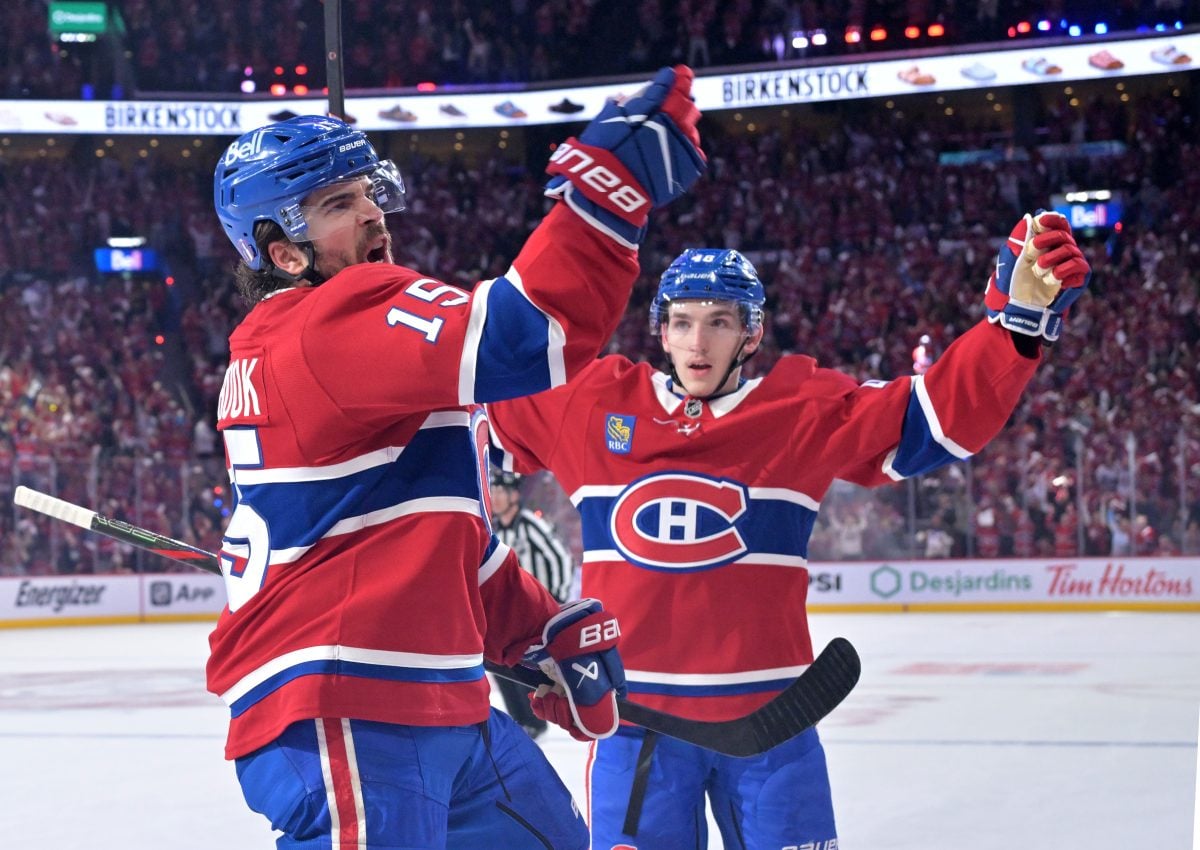
Truth be told, Newhook’s heroics, similar to what fans had seen from Rene Bourque, who came out of nowhere to score eight goals in the spring of 2014, hadn’t been completely unexpected. The capacity for him to put up numbers has always been there, as he is a former first-round pick who had been selected right after Caufield once upon a time.
Playing with rookie-phenom Ivan Demidov to start the season, Newhook scored six goals and 12 points in his first 15 games, but the thought of him scoring two of arguably the three biggest goals for the franchise in a generation (Artturi Lehkonen in Game 6 of Round 3 in 2021) would have been hard to believe. A few months later, it still doesn’t really feel real.
None of it does, to be honest. Sure, the Canadiens may have gotten outclassed by the Hurricanes, but, generally speaking, what they accomplished to get that far hasn’t just resonated with Habs fans. They’ve begun to earn the respect of fan bases across the league, to the point of being widely acknowledged as contenders already.
Considering the decrepit state of the team to start the 2021-22 season, en route to a last-place finish right after their appearance in the Final, that’s impressive. That’s the ultimate feel-good story.
Free Newsletter
Get Montreal Canadiens coverage delivered to your inbox
In-depth analysis, breaking news, and insider takes – free.
Subscribe Free →