


Carlsen and Arjun sign 36-move draw
The TePe Sigeman & Co Chess Tournament opened on Friday afternoon at the Elite Plaza Hotel in Malmö, where the first round produced two decisive games and two draws. Nodirbek Abdusattorov and Andy Woodward made the strongest starts, while Magnus Carlsen’s return to classical chess ended with a draw against Arjun Erigaisi.
One of the draws came in the game between Jorden van Foreest and Yagiz Kaan Erdogmus. In a Catalan Open, Van Foreest was the first to depart from known territory, but the position never moved far away from equality. Neither player managed to create enough imbalances to pose lasting problems, and a draw was agreed on move 30. For Erdogmus, who recently moved past 2700 on the live ratings list at 14 years of age, it was a steady start against an experienced, in-form opponent.
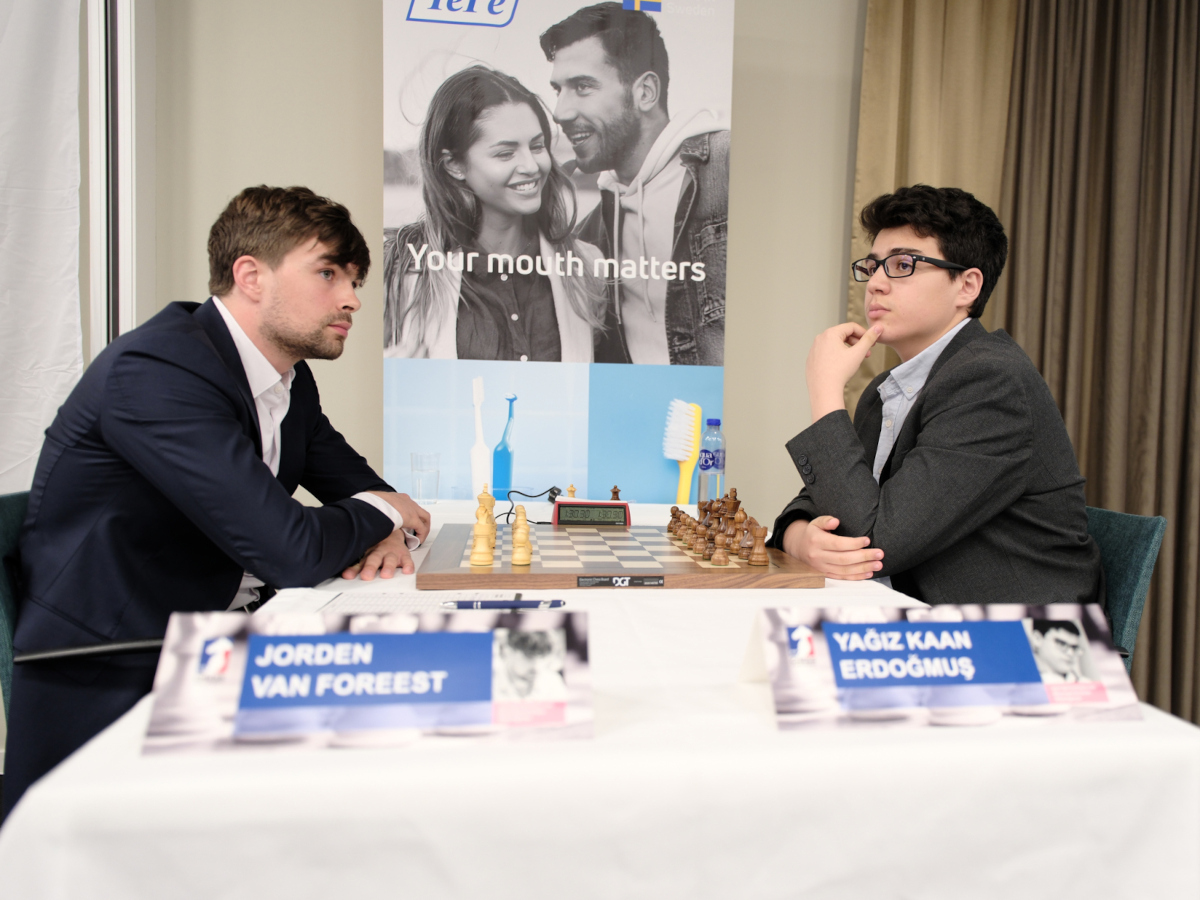
Jorden van Foreest facing Yagiz Kaan Erdogmus | Photo: Mikael Svensson / Official website
Carlsen, the world number one and the most closely watched player in the field, was also held to a draw in what was his first classical game in almost a year. Facing India’s Arjun Erigaisi, he spent nearly ten minutes over his second move after Black chose the Petrov Defence. The early think did not lead to a sharp struggle, as the players entered a quiet variation and gradually simplified.
In this video course, Grandmaster Ivan Sokolov explores one of the most intriguing and under-examined areas of modern chess: reversed opening systems, focusing on the Reversed Grünfeld and the Reversed Dutch. At first glance, these two systems seem unrelated. However, they share a common strategic challenge: the value of tempi, structure, and psychology when familiar openings are played with colours reversed. Drawing on his long professional experience, Sokolov explains why these positions are far more subtle than they appear and why traditional engine evaluations often fail to capture their true complexity.
Free sample video: Introduction
Free sample video: Larsen’s b4 Plan vs Reversed Stonewall Setups: Larsen – Spassky
The draw was agreed after 36 moves, leaving Carlsen to turn his attention to a second-round meeting with his former second Nils Grandelius.
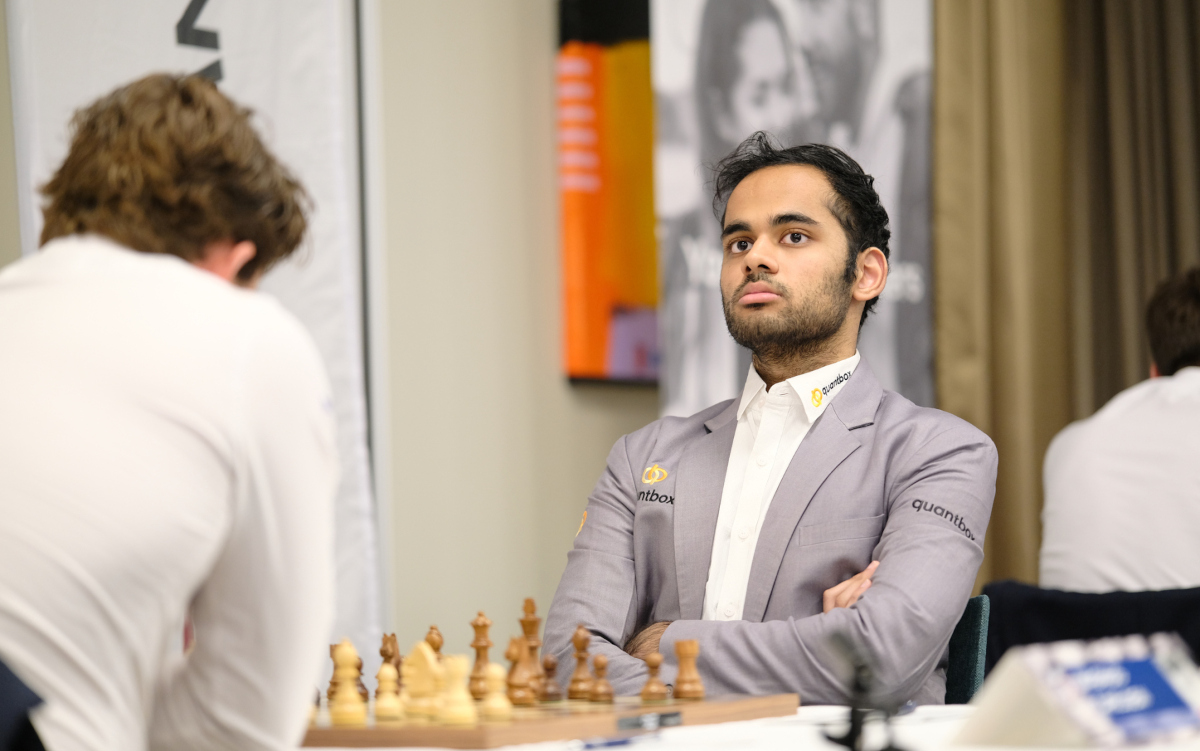
Arjun Erigaisi | Photo: Mikael Svensson /Official website
Grandelius had a difficult start in front of the home crowd, losing to 15-year-old Andy Woodward. The key moment came when the Swedish representative played 26…Rd8?!
Black was already dealing with a tough position due to his inferior pawn structure. However, after, for example, 26…Ke8 or 26…c5, he would have kept the status quo, when it was on Woodward to find a way to make progress. Instead, after the text move, the youngster got to increase his advantage by force: 27.Bb4+ Ke8 28.Rxd8+ Kxd8 29.Bf8
The London System is one of the most popular openings at every level of chess but not all Londons are the same. In this course, Grandmaster Elisabeth Pähtz presents the London System, a structured and ambitious approach based on the immediate Bf4, leading to rich and dynamic positions.
Free sample video: Introduction
Free sample video: 5…cxd4 6.exd4 Qb6 sidelines
Woodward soon grabbed the pawn on h6, and went on to convert his advantage in the opposite-coloured bishop endgame.
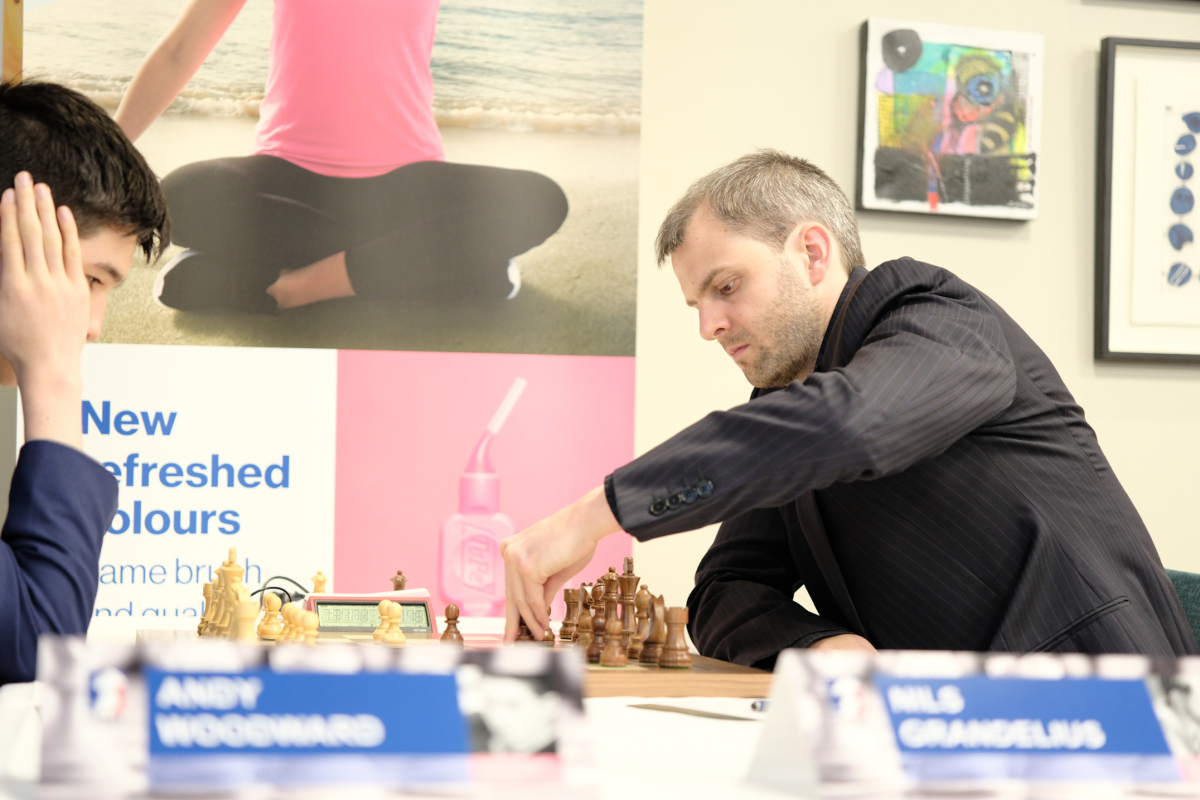
Nils Grandelius | Photo: Mikael Svensson /Official website
Abdusattorov is tied for first with Woodward after defeating Zhu Jiner with the black pieces. Zhu’s 23.Nd4?? proved to be the turning point.
Abdusattorov had no trouble finding 23…Rc8, overloading the queen and forcing the loss of a pawn via 24.Qd2 Qxb2. The Uzbek GM later won a second pawn and converted without giving his opponent counterplay, with Zhu resigning on move 38.
Note that 24.Qa3, attacking the knight on e7, also fails for White due to 24…Qxd4 25.Qxe7 Rxc2 26.Qe8+ Kh7 27.Qxf7 Qxe5! (diagram below) and White cannot capture the queen due to back rank mate on c1.
The result extended Abdusattorov’s strong recent run, which has included tournament victories in London, Wijk aan Zee and Prague.
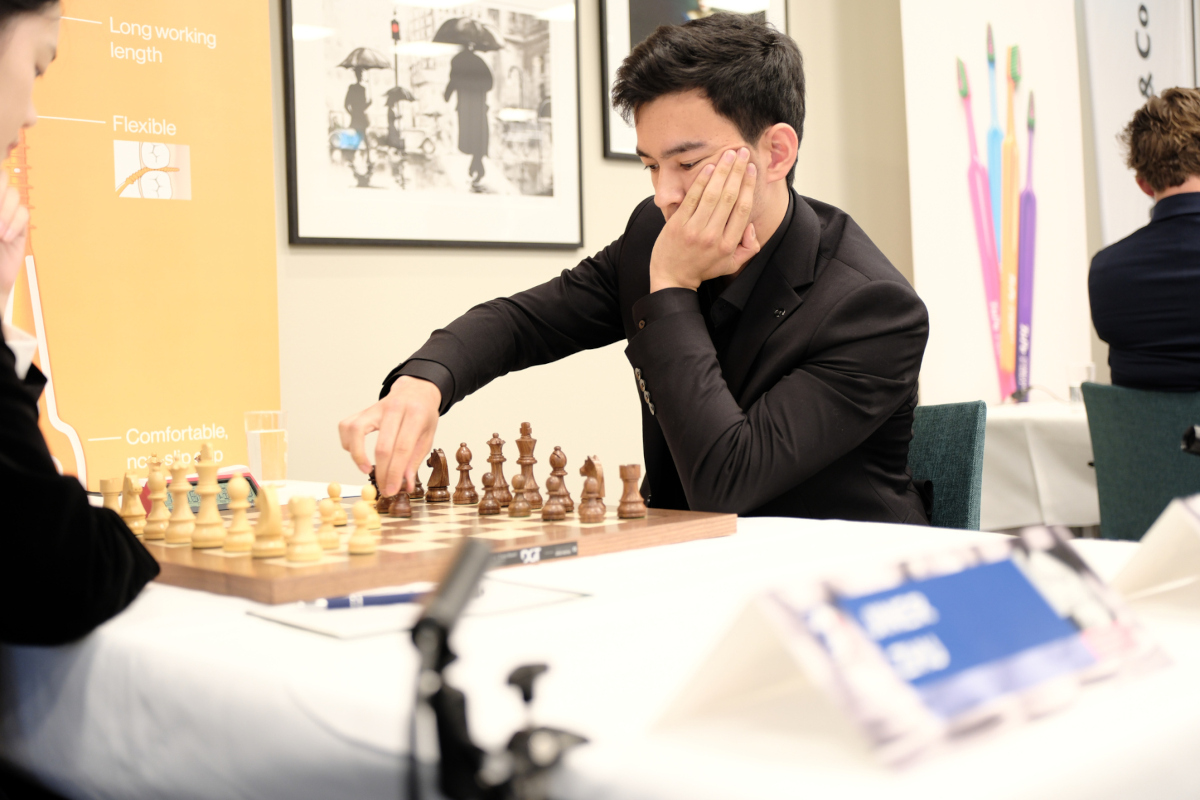
Nodirbek Abdusattorov | Photo: Mikael Svensson /Official website