


Firouzja stuns Carlsen in exciting first round
The first round of Norway Chess saw Alireza Firouzja beat Magnus Carlsen in classical chess for the first time in his career, while Gukesh Dommaraju and Praggnanandhaa Rameshbabu scored Armageddon wins, both with the white pieces, after drawing their classical games.
The tournament, one of the strongest on the yearly chess calendar, has moved this year from its traditional home in Stavanger to Oslo. The format remains a six-player double round-robin, with each round followed by Armageddon deciders in the games that end in draws. A classical win is therefore especially valuable, and Firouzja was the only player to score one on the opening day.
FRITZ is more than just a chess engine – it’s a training revolution! Whether you’re taking your first steps into the world of club chess, or already playing at a tournament level: with FRITZ, you can train more efficiently, intelligently and with a more personalised approach than ever before.
Round 1 results
| White | Result | Black |
| Alireza Firouzja | 3 – 0 | Magnus Carlsen |
| Gukesh Dommaraju | 1½ – ½ | Vincent Keymer |
| Praggnanandhaa R. | 1½ – ½ | Wesley So |
Standings after round 1
| Player | Rating | Federation | Points |
| Alireza Firouzja | 2759 | France | 3 |
| Praggnanandhaa R. | 2733 | India | 1½ |
| Gukesh Dommaraju | 2732 | India | 1½ |
| Vincent Keymer | 2759 | Germany | 1 |
| Wesley So | 2754 | United States | 1 |
| Magnus Carlsen | 2840 | Norway | 0 |
Firouzja’s victory over Carlsen was naturally the most salient result of the round. The French representative arrived in Oslo after withdrawing from the Super Chess Classic Romania because of an ankle injury. He explained in Oslo that he had fallen from the stage in Bucharest, and in his first game in Norway he played with his injured leg stretched out on a chair. After the game, Firouzja noted that he “[loses] more energy than in normal games” in these circumstances, but he nevertheless managed to defeat the seven-time Norway Chess winner and defending champion.
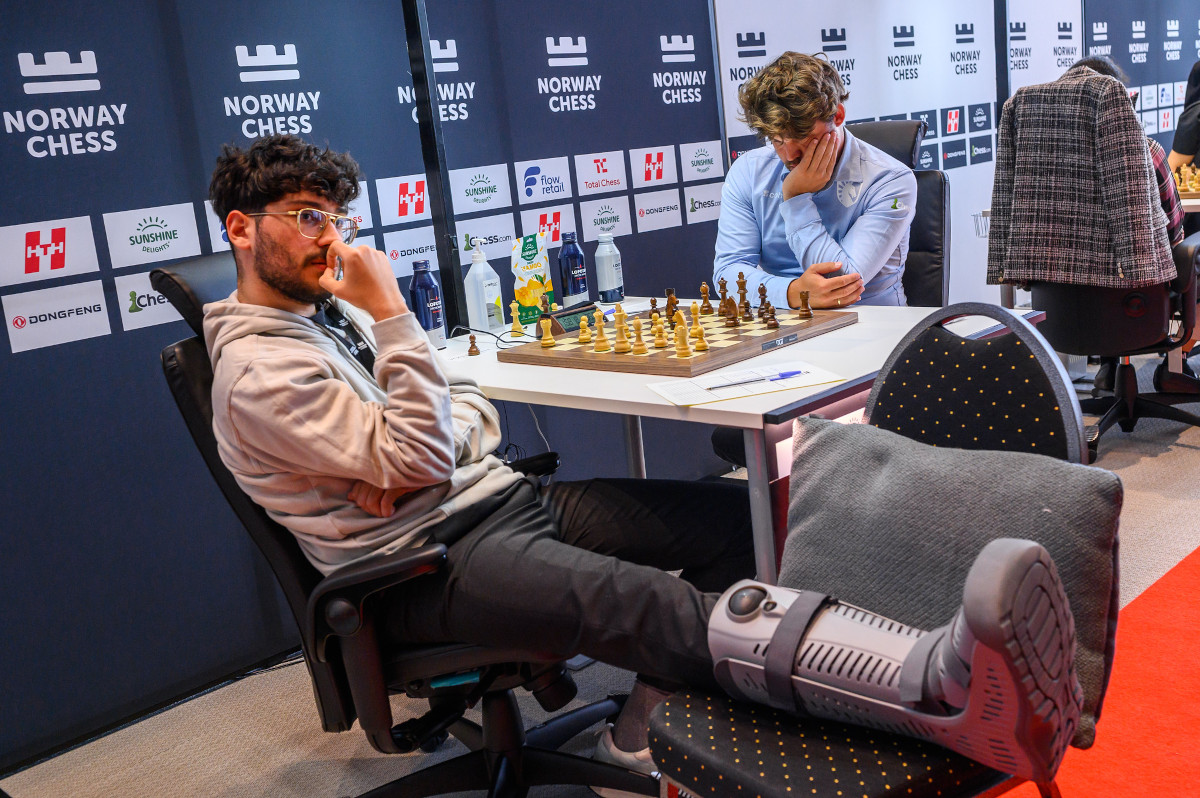
An injured Alireza Firouzja scored a memorable win over the strongest player of this era | Photo: Norway Chess / Michal Walusza
Carlsen, playing with the black pieces, sacrificed a pawn in the early middlegame and obtained considerable compensation, largely based on his control of the light squares. Firouzja, however, dealt well with the practical problems in the position. With no increment before move 41 in the classical games – and only a 10-second increment thereafter – the phase before the first time control proved critical. Carlsen made the decisive error on move 33 and resigned only five moves later.
The result was notable beyond its immediate effect on the standings. Carlsen won each of the last two editions of the tournament despite losing one classical game in both events. In Oslo, he has already used up that margin for error after the first round. Firouzja, meanwhile, returned to the Norwegian event after last playing it in 2024, when he finished fourth in the same six-player format.
33…Kg8?? was the losing mistake, as White consolidated his advantage with 34.e4 Ne3 35.Qf3 Nc2 36.Rc1, and Carlsen found nothing better than 36…Na3. Besides the material advantage, White has strong central pawns, the better minor piece and the safer king.
Resignation came after 37.Bg3 Nb5 38.e5, as White is about to break through.
In the first diagrammed position, Black needs to find a difficult tactical path to keep the battle going. Carlsen had about two and a half minutes, and there are no increments before move 40 in this tournament.
The drawing line is 33…Nxe3 34.Qg6+ Kg8 35.Ra7 (surely Carlsen foresaw this nice-looking attacking recourse), and now Black must find 35…Nd1!
The Benoni family of openings has toppled world champions, decided match games under the highest pressure, and rewarded those brave enough to play them with some of the most electrifying chess imaginable. In this Fritztrainer, Grandmaster Ivan Sokolov – continuing his successful series “Understanding Middlegame Structures” – takes you deep inside the complexities of the Colour-Reversed Benoni, the Colour-Reversed Benko Gambit, and the Colour-Reversed Blumenfeld Gambit.
Free sample video: Introduction
Free sample video: Colour Reversed Banoni – Game 1
Of course, 36.Rxd7?? allows checkmate in one with 36…Rxe1#. Thus, there would follow 36.Bd2 Re1! 37.Bxe1 Qxa7, and Black still needs to defend the position a pawn down, but at least the battle continues – and converting the advantage with White is not at all trivial.
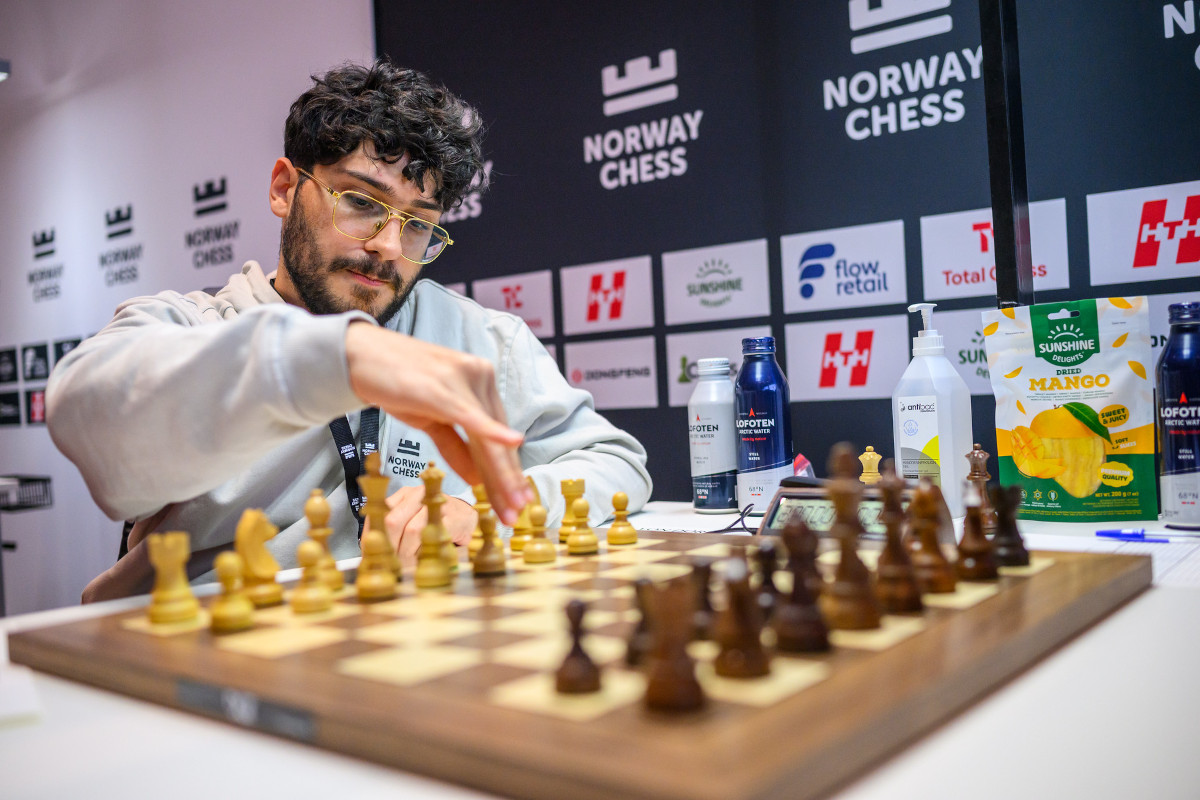
Alireza Firouzja | Photo: Norway Chess / Michal Walusza
The other two classical games ended in draws and were followed by Armageddon games, both of which were won by the player with White.
Gukesh Dommaraju and Vincent Keymer played the longest game of the day, a 144-move struggle in which both players missed chances. Gukesh had the better position as the time control approached, with both players handling much of the game in mutual time trouble. Keymer, who recently won the Grand Chess Tour event in Bucharest, first restored the balance and then took over in a rook endgame.
The game later transformed into a queen endgame in which Gukesh was a pawn down. Keymer pressed for a win, but missed a number of precise continuations. Gukesh incorrectly claimed a draw by the 50-move rule on move 133, at a moment when engines assessed the position as winning for Black – though extremely difficult to convert for a human being.
The world champion later reached the required threshold and was able to claim the draw correctly.
In the Armageddon game, Gukesh took control early. His great-looking 15.Bh6! was the key tactical idea, and the Indian star went on to win in 22 moves, securing the extra half-point after a difficult classical encounter.
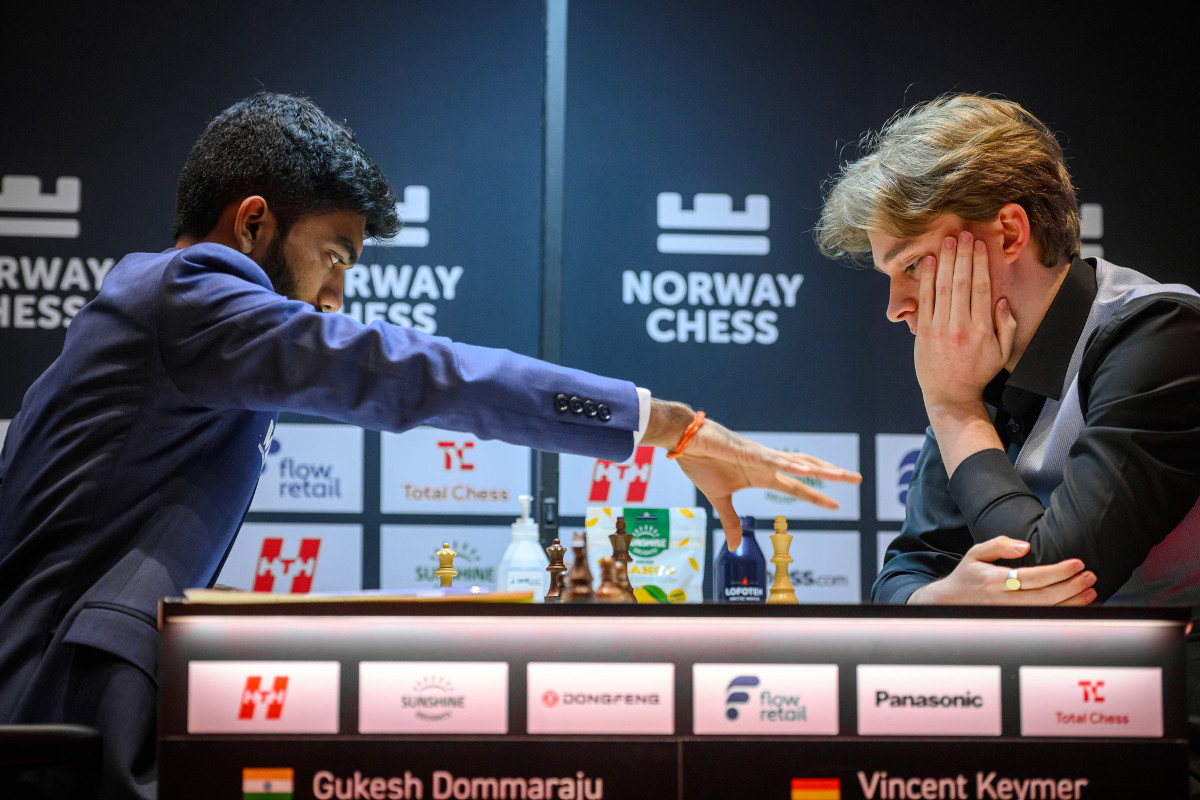
Gukesh Dommaraju facing Vincent Keymer | Photo: Norway Chess / Michal Walusza
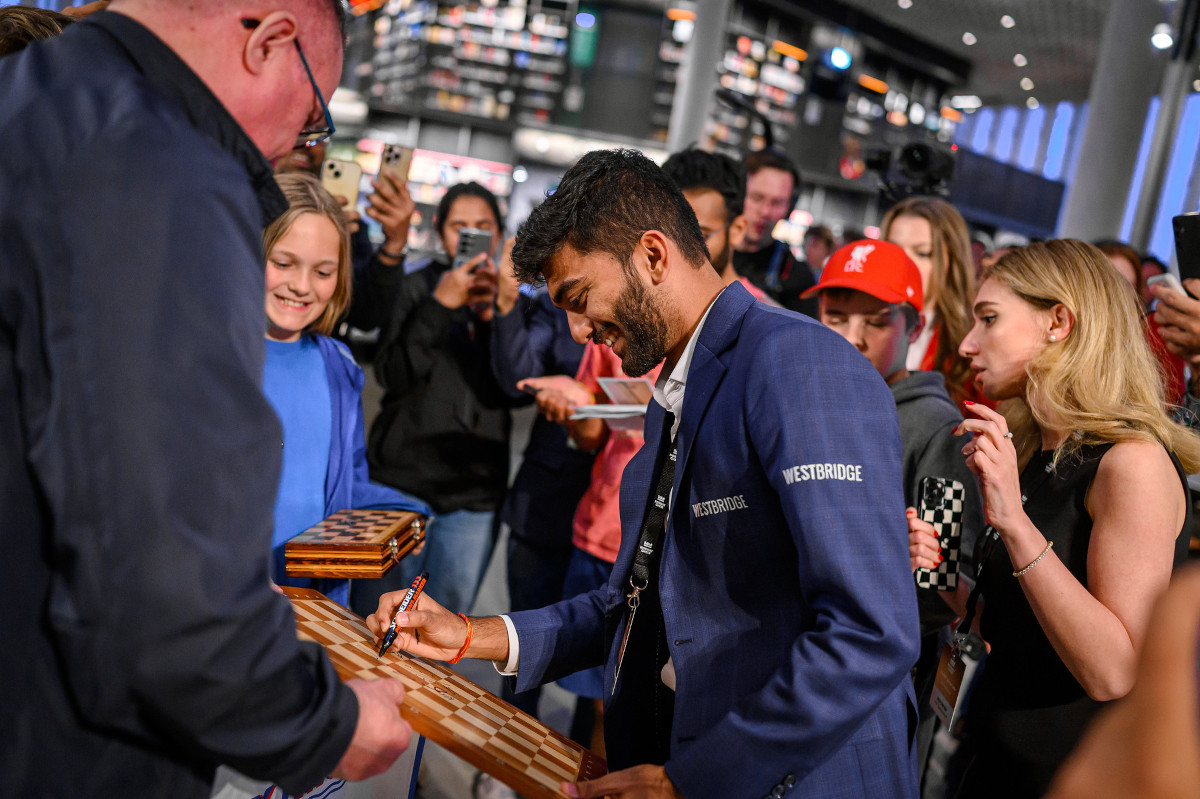
The world champion first escaped with a draw in the classical game and then obtained a convincing win in Armageddon | Photo: Norway Chess / Michal Walusza
Praggnanandhaa Rameshbabu also won his Armageddon game after drawing his classical encounter against Wesley So. Their first game was the least eventful of the three mini-matches, though Pragg did obtain the better position from an English Opening. He missed the correct plan on move 18, and the game was agreed drawn on move 32.
The players repeated the English Opening in the Armageddon decider, where Praggnanandhaa made better use of his chances. He outplayed So and won in 43 moves, taking 1½ points from the round.
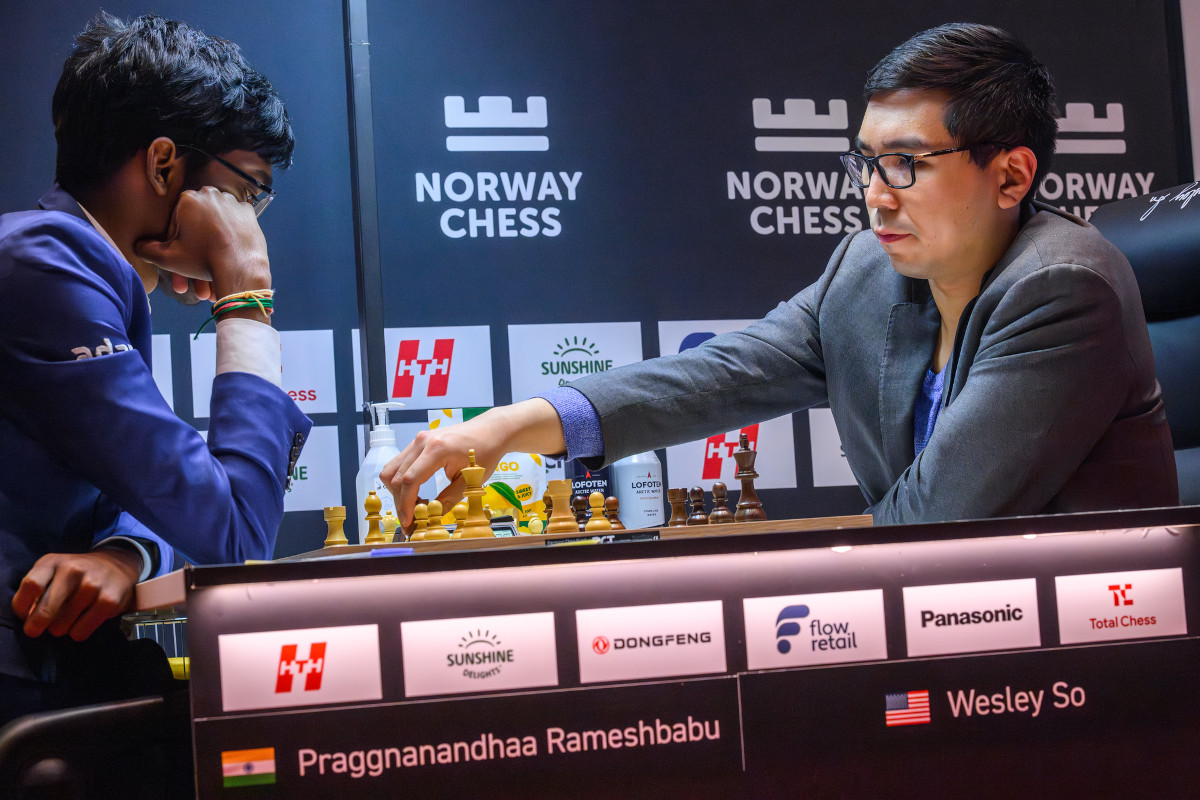
Praggnanandhaa Rameshbabu v. Wesley So | Photo: Norway Chess / Michal Walusza