
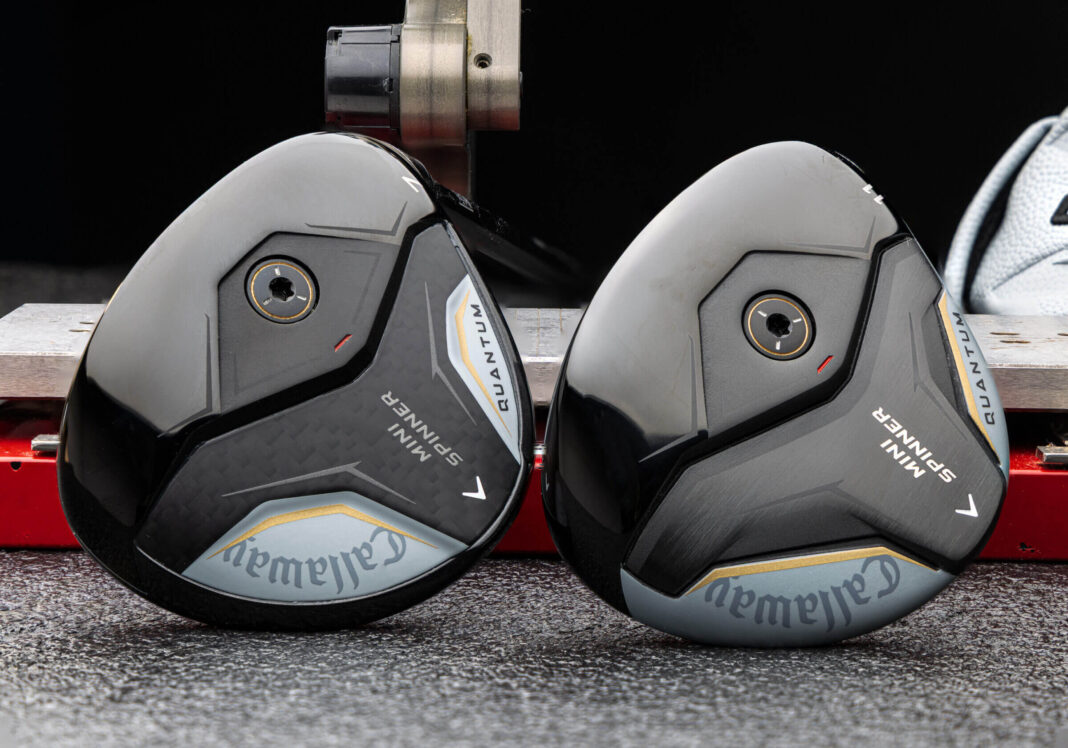

Callaway’s late-summer drop is engineered upside down on purpose with a steel crown and a carbon sole to launch high and land soft. Callaway thinks its new Mini Spinner is the start of a new club category.
I’ve made this observation more than once over the years: Callaway’s late-summer and fall releases are where the company gets a little weird. The mainstream stuff, the drivers and fairways and irons intended for the mass market, land in the first half of the year. What comes after tends to be niche stuff aimed at a smaller audience by design. That’s not a knock (it’s not like we’re talking about cat-themed golf balls here). “Niche” is where some of the more interesting ideas in golf equipment start and every so often the club built to solve one player’s problem turns out to solve it for a whole lot of golfers.
Which brings us to the Quantum Mini Spinner.
About that name
First, let’s talk about the name because I’m not entirely sure it makes sense.
When I heard “Mini Spinner,” I assumed it was a wedge.
It’s not. It’s a high-lofted fairway wood trading on the growth in another emerging club category. Callaway (and most everyone else) already sells a mini driver so whatever rules govern general continuity might suggest that the Mini Spinner is an undersized fairway wood.
Nope.
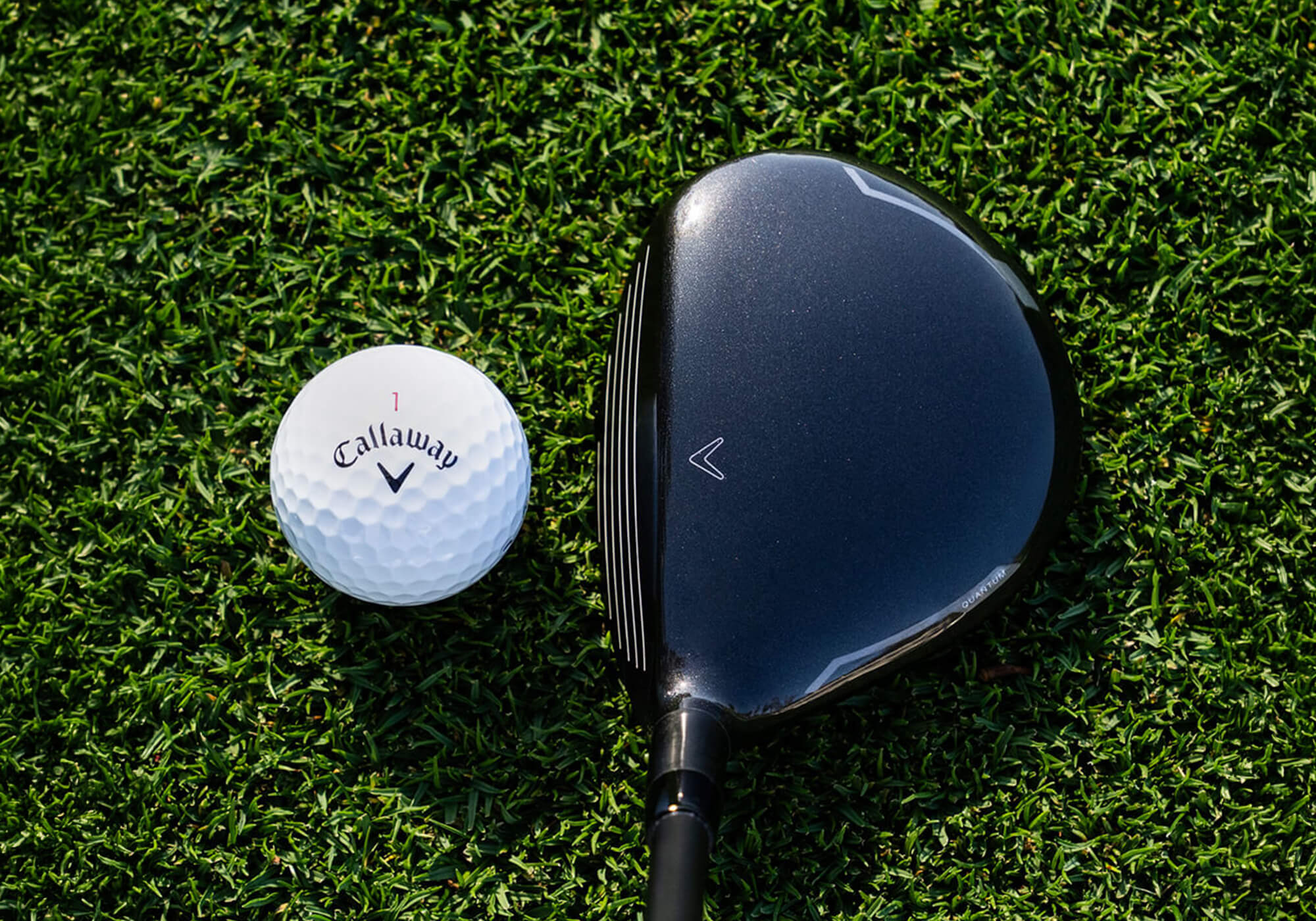
This isn’t a mini fairway wood either. It’s pretty much normal size for a fairway wood.
What’s actually “mini” is the shaft. The Mini Spinner plays three-quarters of an inch shorter than the comparable Quantum fairway wood and, as Callaway VP of Global Product Strategy Jacob Davidson pointed out, irons typically step in quarter- and half-inch increments. Three-quarters of an inch is a real move.
The “spinner” half is at least literal. It spins more.
It started with a player who couldn’t stop a 7-wood
The origin story of the Mini Spinner begins with Yuna Nishimura, a Callaway staffer in Japan with six JLPGA wins who has played the LPGA Tour since 2023.
She came to Callaway with a problem. At championship venues with firm, fast greens, Nishimura was hitting high-lofted fairway woods into greens where the players around her were hitting 5-irons. Her ball came in on a flatter descent angle than theirs and flat descent angles don’t hold firm greens or let you go after pins.
“She really challenged the Asia tour team,” Davidson says. “Can you give me a high-lofted fairway wood that just spins? Like, I want as much spin as I can. Take distance out.”
Then she flew to Carlsbad, Calif., to make the case in person at the Ely Callaway Performance Center. The line the company keeps repeating from those sessions is the one that reframes the whole project: “I need my 7-wood to stop like my 5-iron.”
Why does that matter to you?
We’ve made this point several times—LPGA clubhead speeds line up better with the average golfer than PGA Tour speeds do. When an LPGA player says the equipment isn’t solving a problem, it’s at least possible, maybe even likely, that it isn’t solving yours either.
Flipping design conventions
The starting point for the Mini Spinner wasn’t a clean slate. It was an old Great Big Bertha fairway wood Nishimura had been playing since her school days. Deeper face than Callaway’s current 7-woods, plenty of camber on the leading edge, easy enough to hit out of the rough. Callaway made some tweaks but the Mini Spinner’s shape is built on that DNA.
The construction is where Callaway flipped the script (and some other stuff, too).
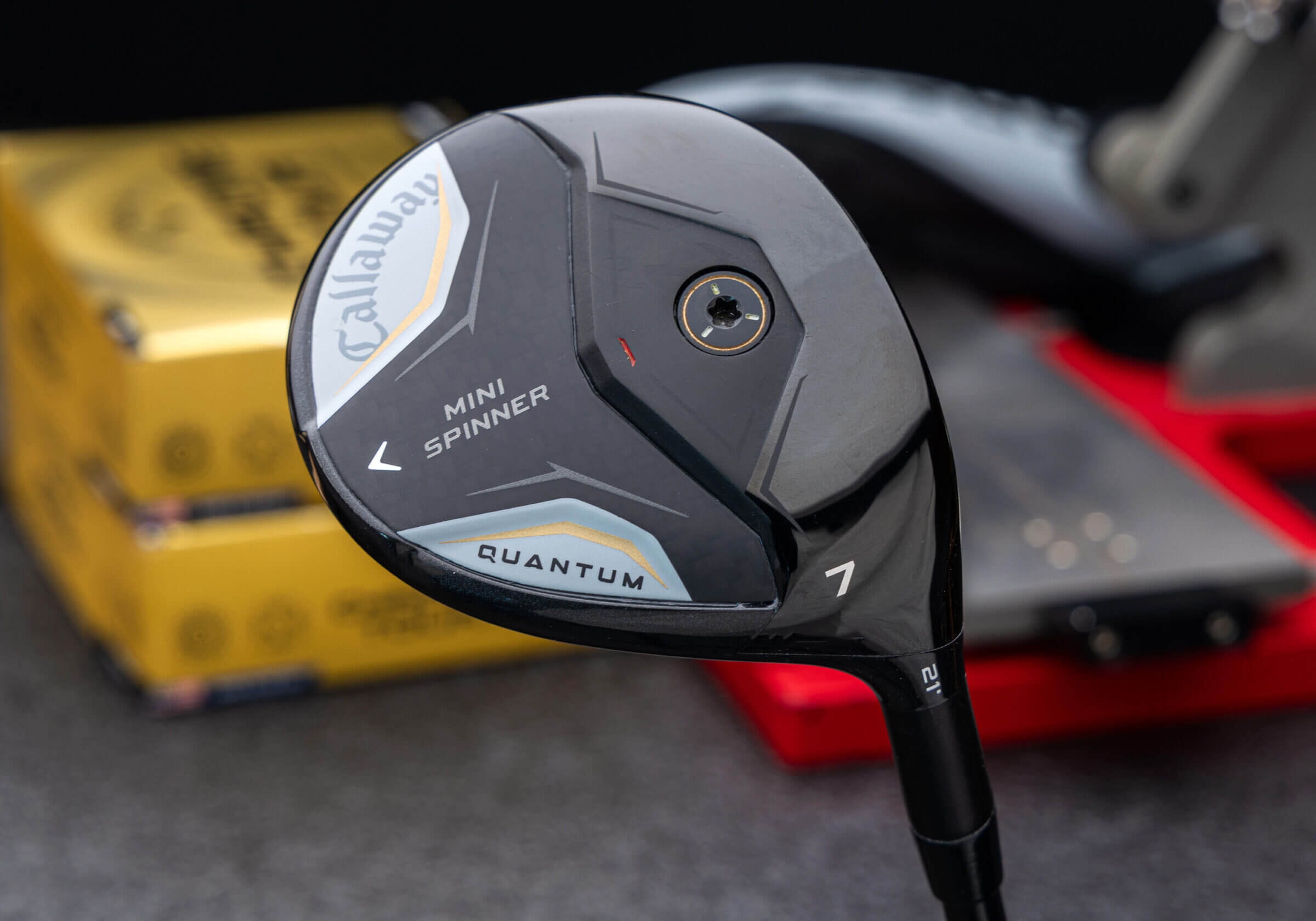
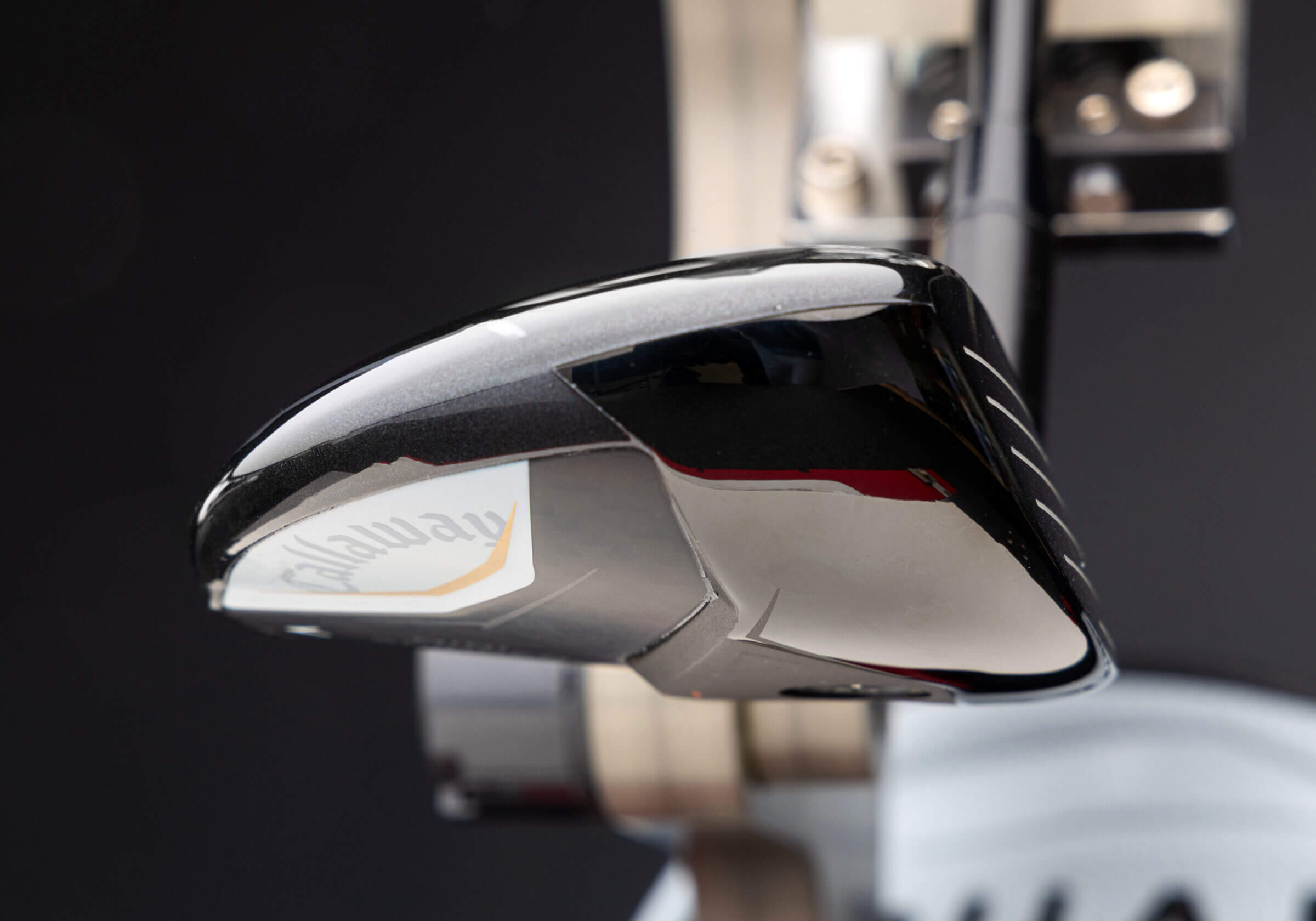
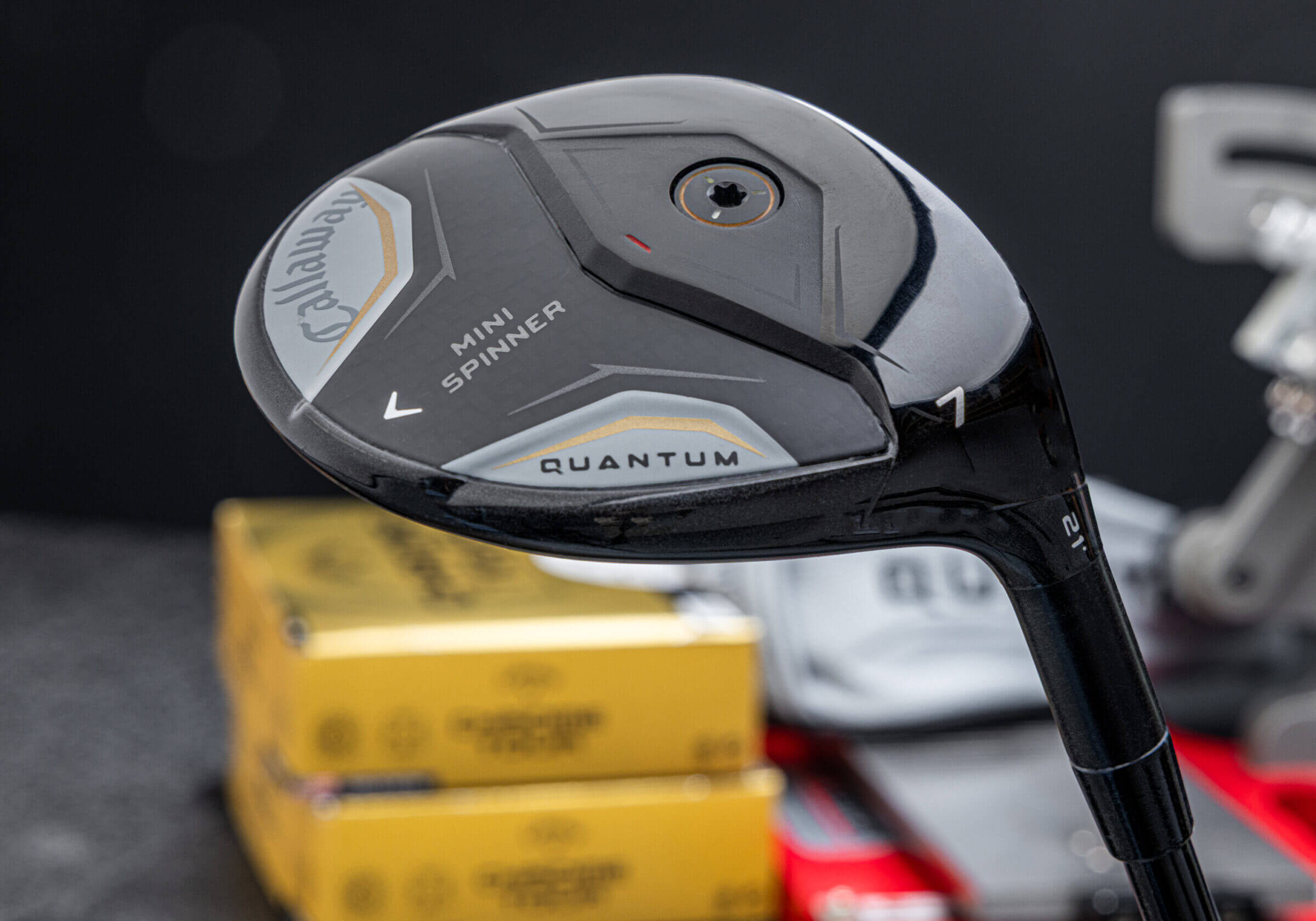
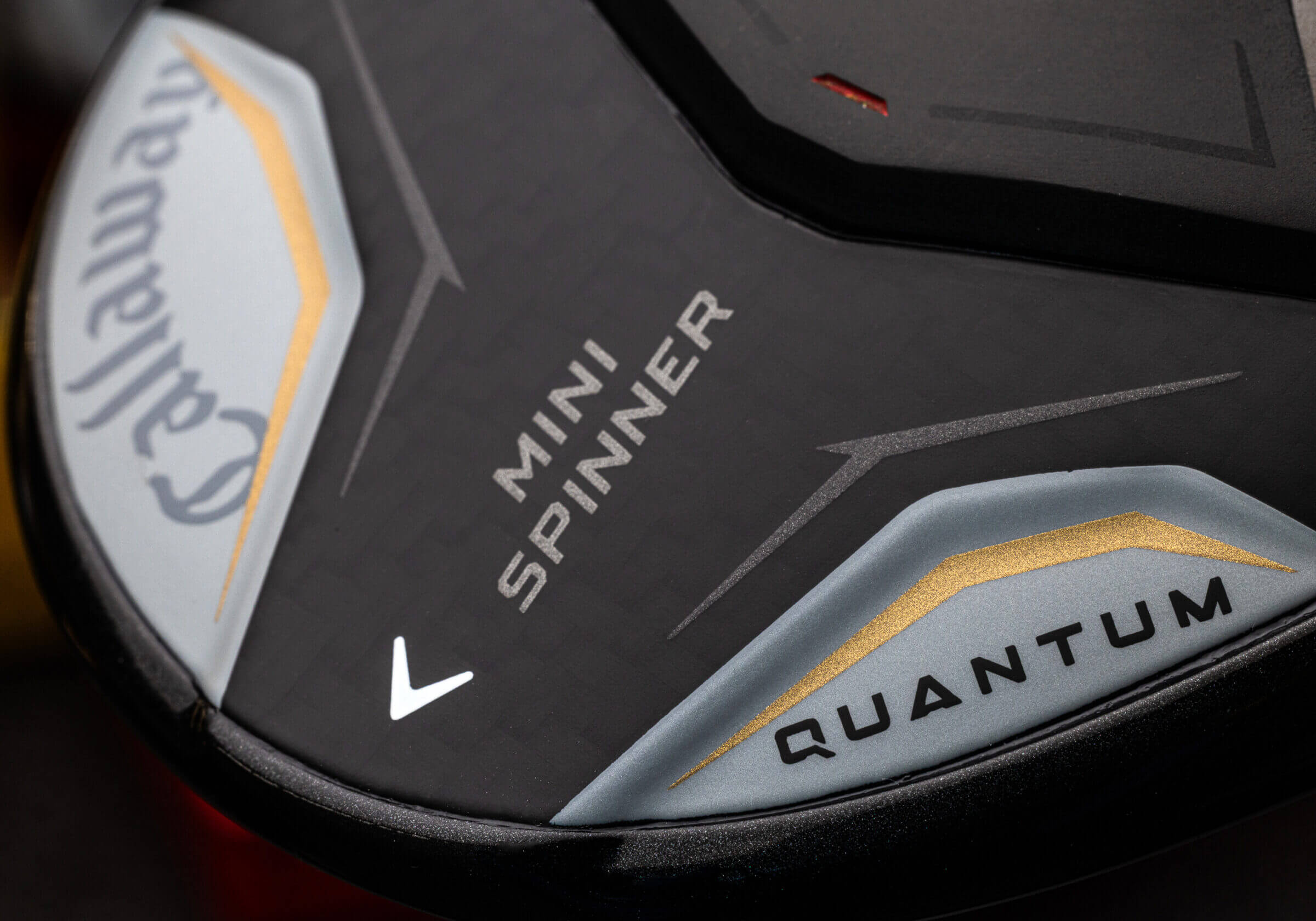
“A lot of our fairways and a lot of our clubs have composite crowns and metal soles and we sort of did the opposite,” says Evan Gibbs, Callaway’s Senior R&D Director for Woods. “It’s got a steel crown and it’s got composite on the sole. So center of gravity is much higher than you would find in a typical hybrid or 7-wood.”
It’s a design approach that runs against nearly everything else in the metalwoods category. Carbon normally goes on the crown to save weight and push mass low. Here it goes on the sole to push mass high because a high center of gravity generates more spin.
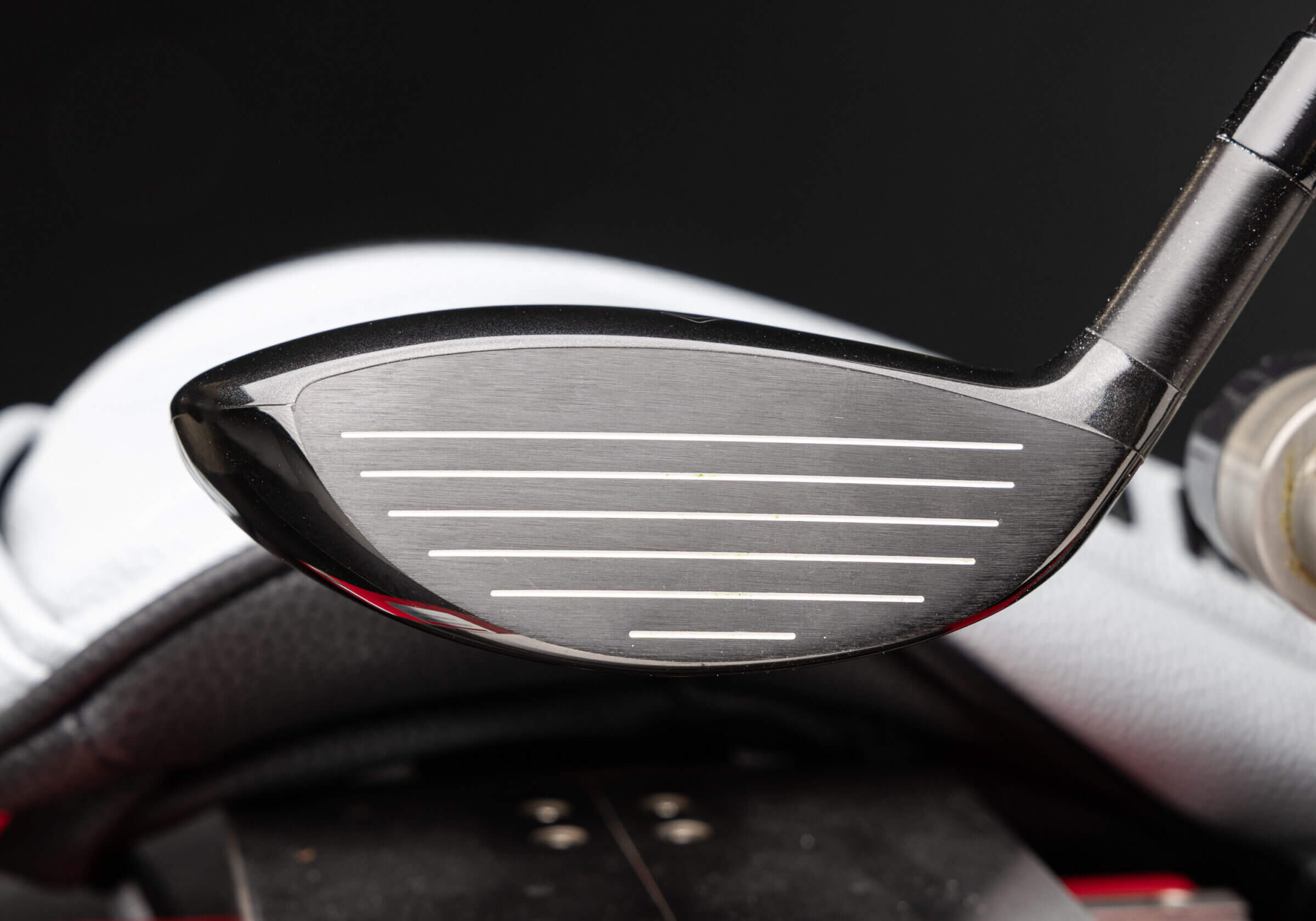
The deeper face compounds the effect. Most golfers make contact below the center of gravity and impact below the CG produces gear effect that adds spin. On a conventional fairway wood, that’s a miss the engineers are trying to design around. Here, it’s pretty much the point.
The sole features the Step Sole geometry that originated in Callaway’s utility woods before trickling up to the larger fairway wood family. It also offers the GBB-derived camber on the leading edge. Between them, the intent is a club that doesn’t dig when you get steep with it which you likely will because of the shorter shaft.
Also worth a mention, the Mini Spinner is a fixed hosel fairway. If you’re chasing a high CG, hosel adapters generally help raise the center of mass which is exactly what Callaway wants with Mini Spinner. Its exclusion is almost counterintuitive.
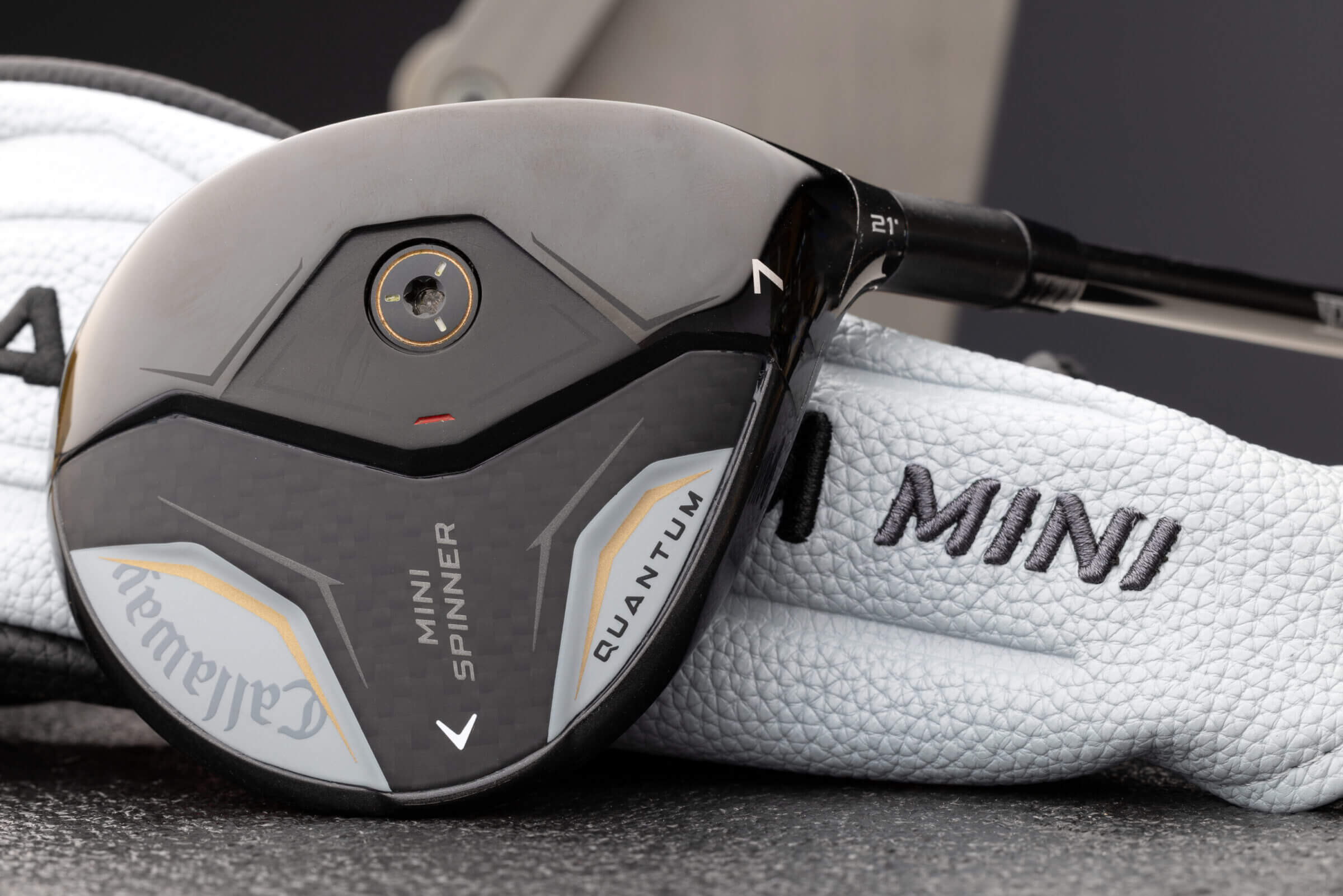
So why is the adjustable hosel missing?
The candid answer is that the club was designed for Japan where fitting culture is different (far less prevalent) and fixed hosels are the aesthetic preference. Gibbs added the practical version: nobody is asking to add a degree of loft to their 11-wood and adjustable hardware looks awkward with a high-lofted face.
For now, that means no adjustability and no fitting heads so fitters won’t have interchangeable options to work with, either. As a staunch believer in the benefits of custom fitting, I don’t love it but it’s also fair to say the need for a Mini Spinner isn’t so much driven by optimization as it is basic problem solving. My point is that if you’re going to limit fitting options for anything in your lineup, this is a reasonable place to do it.
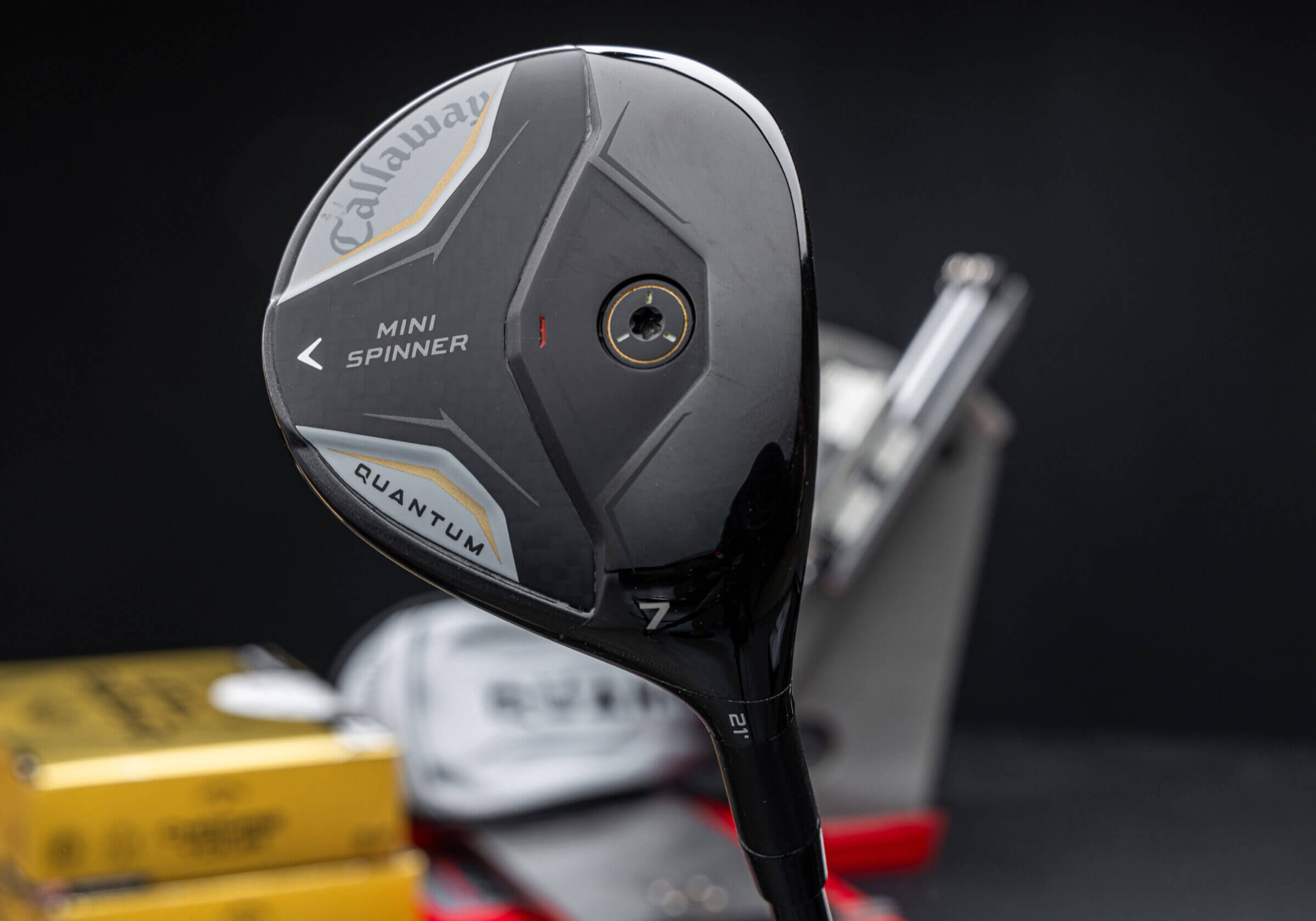
The Mini Spinner is not built for distance
Here’s the part of the story that might come as a shock given the equipment industry’s obsession with adding distance to nearly every club in the bag.
“Almost every club that we make, distance is gonna be a pretty big focus,” Gibbs told us. “This was a fun project, a unique project a little bit, because we sort of took the foot off the gas a little bit on distance and said, ‘That’s not our main objective. We’re looking for consistency. We’re looking for stopping power and, yes, it’s gonna go a little bit shorter.’”
Against a Quantum 7-wood at matched launch, Callaway says you’re looking at 500 to 800 rpm more spin and a downrange dispersion ellipse roughly 50 percent tighter. Against a hybrid, carry actually goes up while total distance goes down because a hybrid might roll out 18 yards and this rolls out 10 or 11.
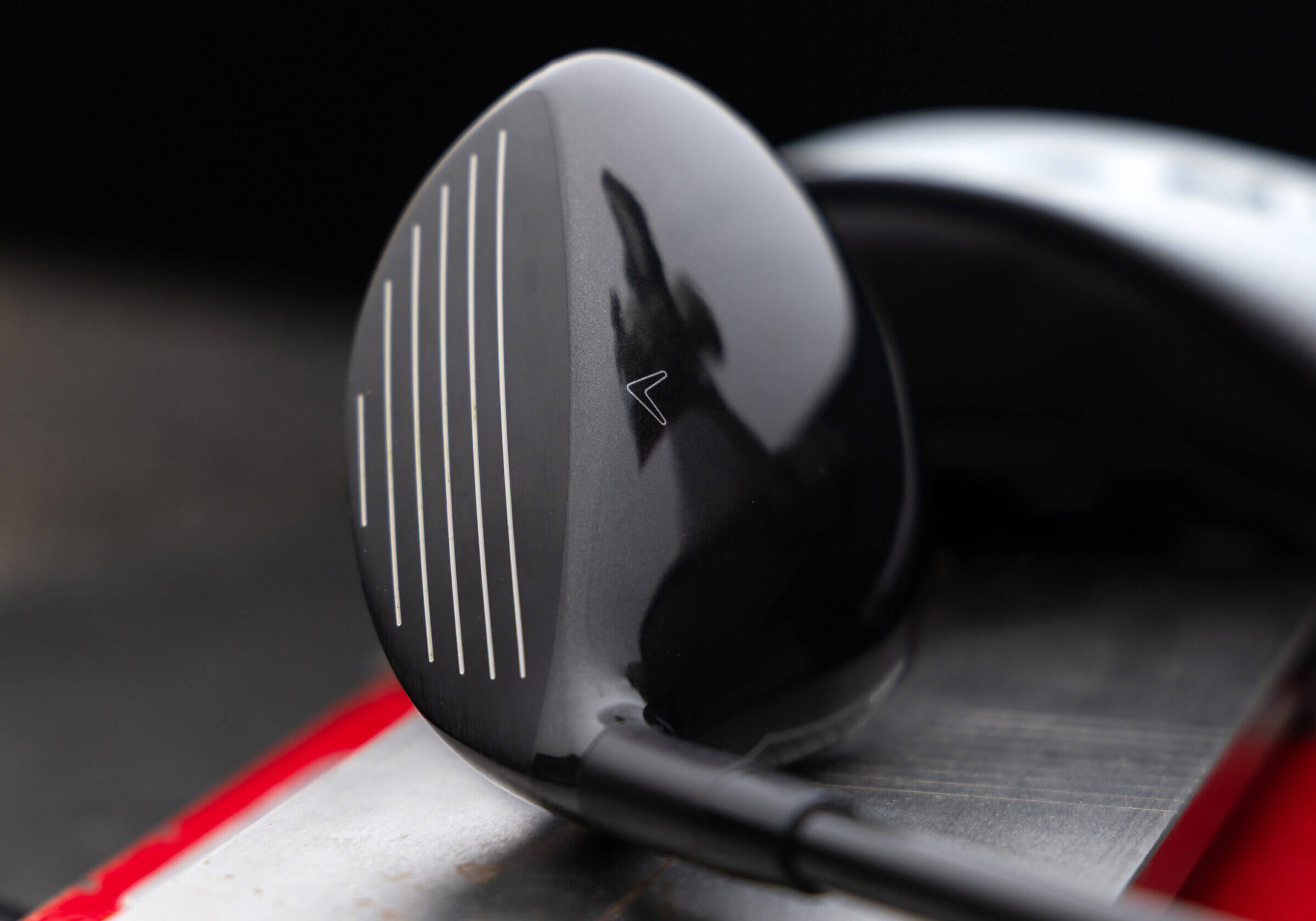
Callaway ran four players through a fitting bay the day before we talked and got 226 yards total for the Mini Spinner against 230 for both the 7-wood and the hybrid. Four guys in a bay isn’t a full test, and I’d expect that gap to move around by player, but the results are what you should reasonably expect.
Rather than emphasize distance, Callaway wants you to think of the Mini Spinner as a “scoring wood” which is a simple way of saying it offers greater precision from longer range. That actually sounds like something that would benefit a lot of golfers.
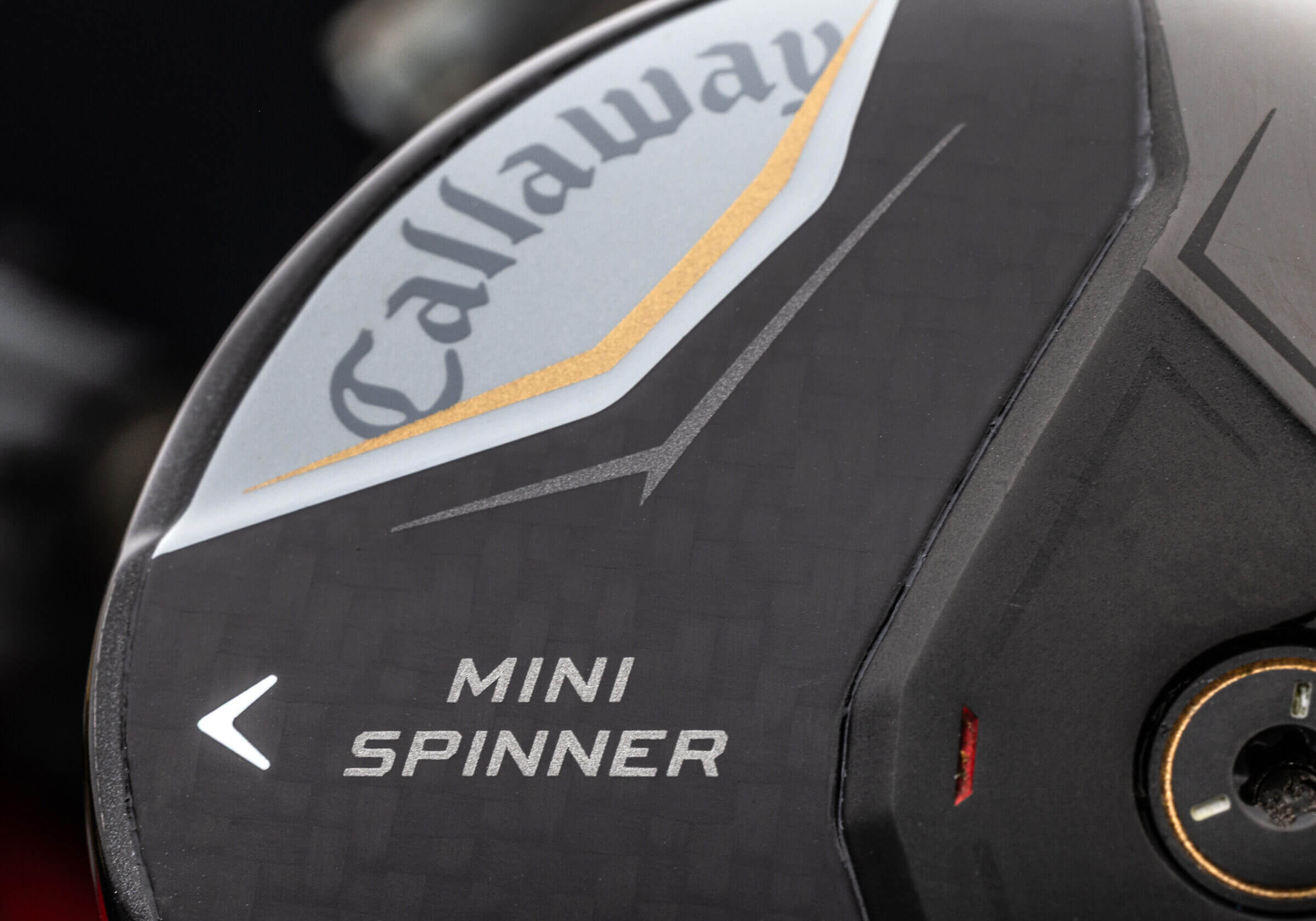
Where it fits
Walk into a fitting bay needing something around 21 degrees to potentially replace a 3- or 4-iron and your options now include a 7-wood, a 4-hybrid, a utility iron, an Apex UW and a Mini Spinner. That’s five reasonable answers to one question which either represents a golden age of opportunity near the top of the bag or near total sensory overload, depending on your tolerance for choice.
Callaway sees it like this.
“Hybrids are very cold right now, and I think that hybrids aren’t winning against high-lofted fairway woods,” Davidson says. “What we’re seeing is hybrids are gonna become, and this is our philosophy, more of a replacement in mid irons and not long irons. The 7-wood’s going to outperform the 4-hybrid for the average golfer.”
As somebody who made the switch to a 7-wood several years ago, my take is that he’s not wrong (even if “cold” is a sales observation as much as a performance one). The challenge for Callaway comes in helping golfers make sense of their options. With at least five viable club types for one or two spots in the bag, there’s a case to be made that Callaway’s pursuit of ever-increasing options has outrun the average golfer’s ability to navigate them.
From Japan to Carlsbad
The Mini Spinner launched in Asia earlier this year and the plan was to leave it there.
There’s a practical reason small, strange ideas go to Japan first. A U.S. launch is expensive. Fitting carts, account commitments, sales rep attention. It’s a lot. In Japan, there’s only a handful of large retailers that handle distribution and the golf culture isn’t built nearly as much around fitting. The point is that in Japan you can get real distribution without distracting anybody. The nature of the market provides a low-cost way to figure out whether a niche club has an audience. According to Callaway, when the Mini Spinner hit No. 1 in the market, they had their answer.
The more convincing signal came from Carlsbad. Callaway puts global product into its test center regardless of whether it’s sold in the U.S. and the ECPC fitters started putting people into the Mini Spinner unprompted, including golfers who walked in specifically complaining that their hybrids run through greens. It wasn’t just the demographic you’d expect for a high-lofted fairway wood that was drawn to the Mini Spinner which is ultimately why Callaway is releasing it here.
Hands on with Callaway’s other Mini
Callaway built a Mini Spinner to my current specs and I, along with our Community Manager Andrew Zanzig, hit it on the range at ECPC.
The experience reminded me a bit of the time I spent this year with 8-hybrids from PING and PXG. It’s genuinely easy to get in the air and close to impossible to hit significantly offline. I couldn’t slice it. I did hit a couple of hard pulls, because it happens.
“Straight up, straight down” is the honest description. As advertised, you’re not going to maximize distance with it. But if what you want is easy height, a soft landing and a ball that stays between the stakes, it’s arguably the best fairway wood I’ve hit for that specific task.
And while playing better golf is the stated goal for most of us, I’d be remiss not to mention that it’s just fun to hit.
Spawning a new category?
Callaway believes the Mini Spinner represents the first offering in a new category. Internally, the company files it alongside the Apex UW and the Full Toe wedge as a “category creator” which is probably a phrase that gets used more often than it should.
Here’s my honest read. Strip away the language and the Mini Spinner is a high-lofted fairway wood with an inverted material package, a deeper face, a shorter shaft and a more upright lie. Those are all specs, and specs don’t automatically make a category. Whether this becomes a shelf the way mini drivers did or a one-generation curiosity that quietly folds back into the fairway line will be answered by golfers over the next two years, not by a singular launch.
What I will say is that it does something the other four options at 21 degrees don’t. It’s the only one built around stopping the ball rather than moving it. For the golfer who under-spins everything at the top of the bag and has spent years watching approach shots skip through the back, category creator or not, it solves a problem.
Specs, pricing and availability
The Quantum Mini Spinner comes in three lofts: 7-wood (21 degrees), 9-wood (24 degrees) and 11-wood (27 degrees). There’s no 3- or 5-wood and Callaway says it doesn’t see the value in one right now. The 7-wood plays 41.5 inches at a 60.5-degree lie which is 0.75 inches shorter and 2.5 degrees more upright than the standard Quantum 7-wood. Length steps down and lie gets progressively more upright through the 9- and 11-woods.
Construction is a steel crown with a carbon sole in the 7- and 9-woods. The 11-wood doesn’t have the carbon sole because with the smaller size, there’s not a lot of weight savings to be realized via the carbon sole, and, besides, it’s an 11-wood and I’m guessing it already launches plenty high. Completing the package are an AI-optimized high-spin face and a Step Sole design refined for this head. As noted, the hosel is fixed.
The stock shaft is the Project X Denali Frost, matching the rest of the Quantum fairway line, with a Golf Pride Tour Velvet 360 grip.
MSRP is $379.99, same as a standard Quantum fairway wood. Retail availability begins Aug. 14.
For more information, visit Callawaygolf.com.
The post Callaway Quantum Mini Spinner: A Fairway Wood Built To Spin More And Go Shorter appeared first on MyGolfSpy.